Painting & Waterproofing
UA Engineering Blog & Insights
Why Is Paint Peeling Off Exterior Walls, and What Should You Do?
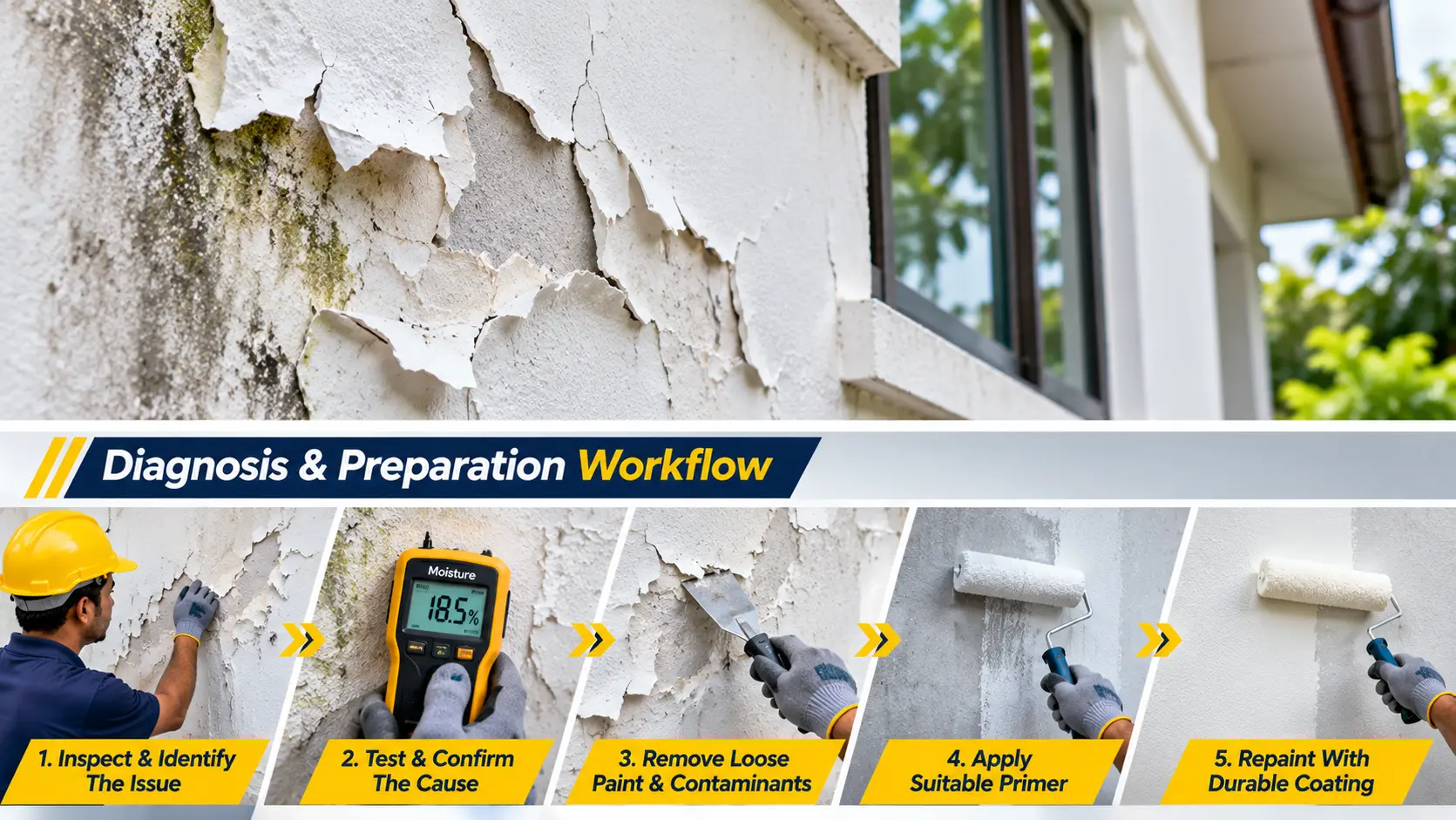
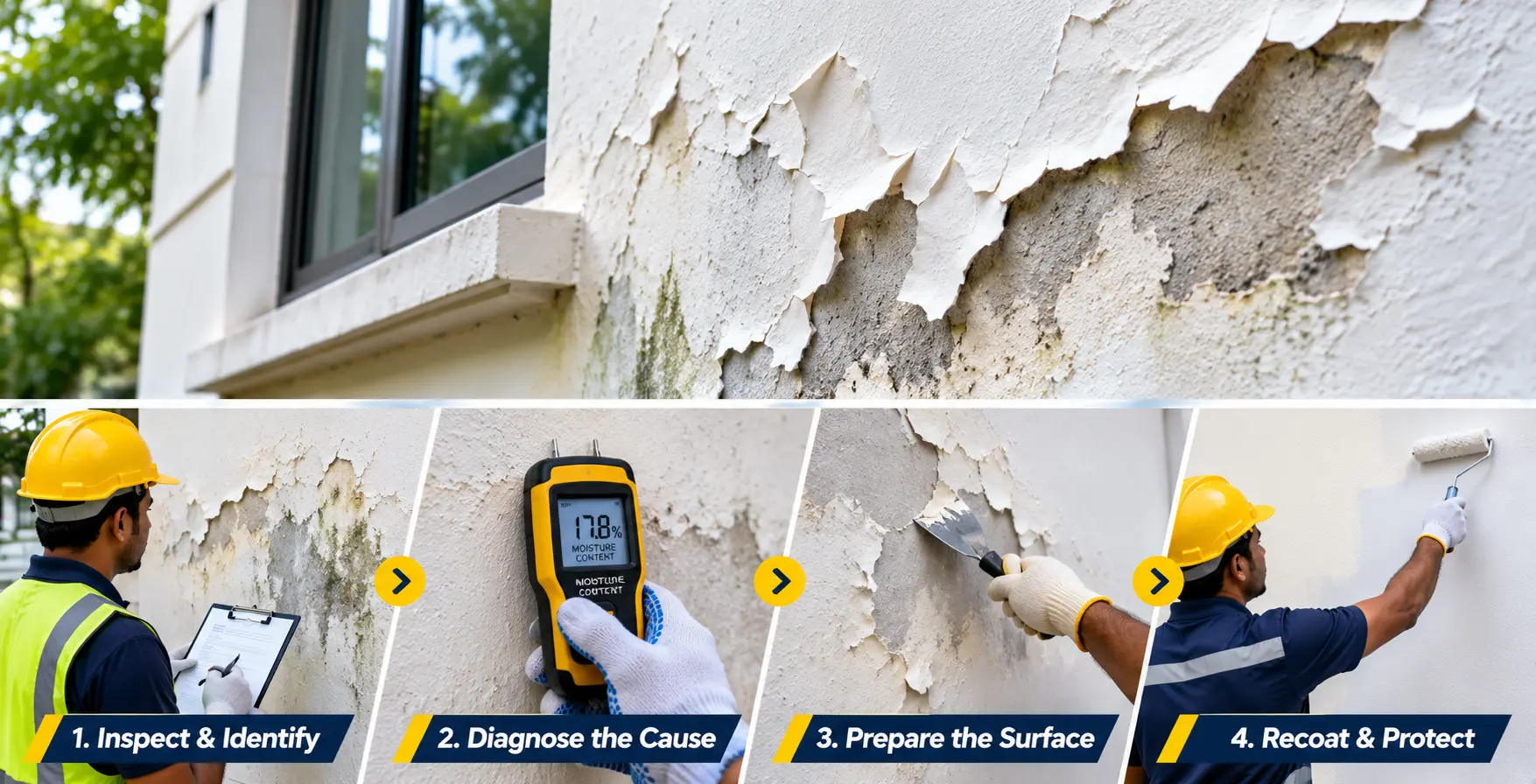
Peeling exterior paint is more than a cosmetic problem. It can indicate moisture intrusion, poor surface preparation, weak paint adhesion or deterioration of the existing coating. In Singapore's humid, rainy climate, identifying the underlying cause is particularly important before repainting. This guide explains the common causes, how to inspect the affected wall, and when professional testing or repair is necessary.
1. What Causes Exterior Paint to Peel?
Exterior paint forms a protective and decorative layer over a wall. When the coating loses adhesion or the underlying surface becomes unstable, paint may begin to crack, blister, flake or peel away.
The appearance of the damage can provide clues, but it does not always identify the exact cause. Several problems can produce similar symptoms, and more than one cause may be present.
Moisture entering the wall
Moisture is a common reason for exterior paint failure. Rainwater may enter through cracks, damaged sealant, roof edges, window junctions or poorly maintained external surfaces. Water can also move through the building fabric from plumbing leaks or other concealed sources.
When moisture becomes trapped beneath a coating, it can weaken adhesion and cause blistering or peeling. White powdery deposits may also appear on masonry surfaces. These deposits, commonly called efflorescence, can indicate that moisture has moved through the wall and carried soluble salts to the surface.
Repainting without identifying and addressing the moisture source may lead to the same problem returning.
Poor surface preparation
Paint needs a clean, sound and suitably prepared surface. Dust, loose old paint, chalking, grease, algae and other contaminants can prevent the new coating from bonding properly.
If peeling paint is simply covered with another coat, the new coating may adhere to the weak layer rather than the wall itself. The old paint can then detach together with the new finish.
Adhesion or coating compatibility problems
Paint systems are designed for particular surfaces and applications. Using an unsuitable primer, applying a coating over an incompatible existing finish or failing to follow the manufacturer's instructions can contribute to adhesion failure.
Other factors include incorrect thinning, unsuitable application conditions, insufficient drying time between coats and applying paint outside the recommended temperature or humidity conditions.
Ageing and weather exposure
Exterior coatings are exposed to sunlight, rain, heat, humidity and airborne contaminants. Over time, the binder and protective properties of a coating may deteriorate.
Signs can include fading, chalking, cracking, loss of flexibility and gradual flaking. A coating that has reached the end of its service life may need more than a simple touch-up.
Biological growth and contamination
Algae, mould, mildew, dirt and pollution can affect exterior surfaces. If these contaminants are not removed and treated appropriately, they can interfere with coating adhesion or return after repainting.
Important: Peeling paint is a symptom, not a complete diagnosis. Identify the underlying cause before choosing a repair method.
2. How to Diagnose the Problem
Start with a safe visual inspection from accessible areas. Do not climb onto unsafe ledges or use ladders without appropriate precautions.
Record the affected locations, the size of the damaged areas and whether the problem appears after rainfall or during particular weather conditions.
Look at the pattern of damage
Blisters or bubbles: May indicate moisture, heat or trapped air beneath the coating.
Large sheets of peeling paint: May suggest poor adhesion, an unstable old coating or moisture-related failure.
Fine cracking and flaking: May indicate ageing, excessive coating thickness or loss of flexibility.
White powdery deposits: May indicate salts moving through masonry with moisture.
Dark stains or green growth: May suggest persistent dampness or biological contamination.
Damage around windows and joints: May indicate failed sealant or water entry at junctions.
These are diagnostic clues, not definitive conclusions. Different problems can produce similar appearances.
Check the surrounding building details
Inspect accessible areas around:
Window frames and external sealant.
Roof edges, parapets and gutters.
Balconies and ledges.
External pipes and service penetrations.
Cracks and joints.
Areas below air-conditioning drainage outlets.
Locations with recurring water stains.
If the peeling is concentrated below a window or near a roof junction, investigate that area for possible water entry instead of assuming the paint itself is the only problem.
3. When Is Testing or Professional Inspection Needed?
A visual inspection is useful for identifying obvious defects, but it cannot always reveal concealed moisture, the condition of the substrate or the compatibility of existing coatings.
Consider professional inspection when:
Peeling repeatedly returns after repainting.
Large sections of exterior coating are detached.
The wall remains damp after dry weather.
Water stains appear inside as well as outside.
Cracks are widening or appear to affect the building fabric.
There are signs of concealed plumbing or roof leakage.
The wall has extensive salt deposits or biological growth.
The coating system is unknown or several old paint layers are present.
Moisture assessment
A professional may use a suitable moisture meter to compare readings across affected and unaffected areas. The result needs to be interpreted according to the material, instrument and site conditions. A single reading should not automatically be treated as proof of a leak.
Where necessary, further investigation may be required to identify water entry, concealed plumbing issues or moisture movement through the building fabric.
Adhesion assessment
A coating professional may carry out an appropriate adhesion test to assess whether existing paint is firmly attached to the substrate. The test method should suit the coating and surface. Testing may also help determine whether weak layers need to be removed before repainting.
Structural or building assessment
If peeling is accompanied by significant cracking, concrete deterioration, exposed reinforcement, movement or falling material, arrange an assessment by an appropriately qualified building professional. Do not treat these conditions as ordinary painting defects.
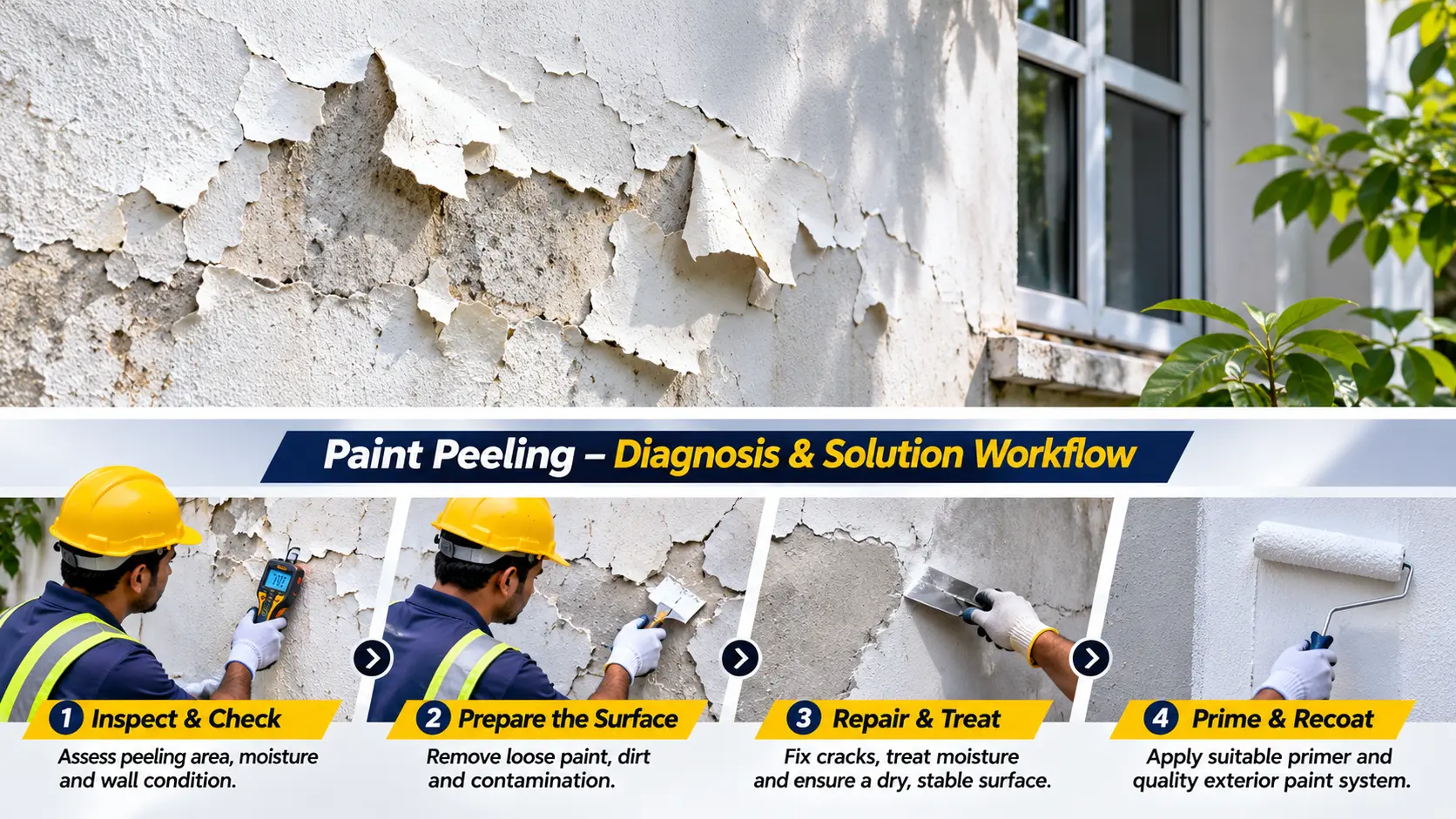
4. How to Repair Peeling Exterior Paint Correctly
The correct repair method depends on the diagnosis. Repainting should begin only after the cause of failure has been addressed and the surface is suitable for a new coating.
Step 1: Identify and resolve moisture sources
Check whether water is entering through cracks, joints, roof details, window frames, plumbing or other building components.
Repair the underlying defect using a suitable method. For example, damaged external sealant may need replacement, while a concealed leak may require plumbing or building repairs.
Do not seal a surface or apply a waterproof coating without understanding where the water is coming from and how the wall needs to dry.
Step 2: Remove loose and unstable paint
Scrape away paint that is detached, blistered or poorly bonded. The removal should continue until the remaining coating and substrate are sound.
Use suitable tools and precautions to control dust and falling debris. Older coatings may contain hazardous substances, so avoid aggressive sanding or dry removal when the coating composition is unknown. Obtain appropriate advice where necessary.
Step 3: Clean and treat the surface
Remove dust, dirt, grease, algae and other contaminants using a method suitable for the wall and coating system.
If biological growth is present, use an appropriate treatment and follow the product instructions. Allow the surface to dry properly.
Step 4: Repair cracks and damaged areas
Repair suitable surface cracks, holes and damaged plaster using compatible materials. Larger or recurring cracks may need professional assessment before filling.
The repaired surface should be stable, properly finished and ready for the specified primer.
Step 5: Apply a suitable primer
Select a primer compatible with the substrate, existing coating and intended exterior paint system. Different surfaces may require different primers, such as masonry primer or a sealer designed for a particular condition.
Follow the manufacturer's requirements for application, coverage and drying time.
Step 6: Apply the exterior coating
Apply the specified exterior paint system in accordance with the product instructions. Respect the recommended number of coats, application conditions and drying intervals.
Avoid painting during unsuitable weather or when the substrate is not sufficiently dry. A high-quality coating cannot compensate for inadequate preparation or unresolved moisture.
5. Choosing the Right Exterior Paint System
The paint should be selected according to the wall material, exposure and condition—not simply by colour or price.
When comparing products, consider:
Suitability for exterior masonry or the actual substrate.
Resistance to weather exposure.
Water vapour permeability where relevant.
Resistance to dirt and biological growth.
Compatibility with the primer and existing coating.
Recommended surface preparation.
Coverage and number of coats.
Maintenance and warranty conditions.
For example, a coating intended for a smooth interior wall may not be suitable for an exposed exterior masonry surface. Ask the supplier or coating professional to recommend a compatible system for the specific wall condition.
Also consider the finish. Different exterior finishes can affect appearance, cleaning and the visibility of surface imperfections. Review a sample where practical before committing to a large area.
6. Common Mistakes to Avoid
Painting directly over peeling areas: Loose paint remains a weak layer and can cause the new coating to detach.
Ignoring water entry: Repainting without resolving leaks or moisture sources often results in recurring damage.
Using the wrong primer: An incompatible primer can affect adhesion and coating performance.
Skipping cleaning: Dust, chalking, algae and other contaminants can interfere with bonding.
Rushing drying time: Applying subsequent coats before the surface or previous layer is ready can affect the finish.
Choosing paint only by price: A suitable coating system should be selected based on the surface, exposure and product specifications.
Ignoring safety: Exterior work may involve heights, falling debris, pressure-washing equipment and chemical products. Use competent workers and appropriate access and safety controls.
7. Practical Inspection and Preparation Checklist
Before arranging exterior repainting, review the following:
Diagnosis
Identify all visible peeling and blistering.
Photograph affected areas.
Check for water stains and damp patches.
Inspect accessible cracks, joints and sealant.
Look for algae, mould and salt deposits.
Note whether the damage changes after rainfall.
Professional assessment
Arrange moisture assessment where necessary.
Check coating adhesion if the existing paint is unstable.
Investigate recurring leaks.
Refer significant cracks or concrete deterioration for professional assessment.
Confirm whether specialist access or safety arrangements are needed.
Surface preparation
Resolve the identified moisture source.
Remove loose and unstable paint.
Clean contamination and biological growth.
Allow the wall to dry appropriately.
Repair suitable cracks and damaged plaster.
Confirm that the substrate is sound.
Repainting
Select a compatible primer.
Confirm the exterior paint specification.
Follow the manufacturer's application instructions.
Allow appropriate drying intervals.
Inspect coverage and finishing.
Keep product and warranty information.
8. When to Engage a Professional Painting and Waterproofing Contractor
Small areas of superficial peeling may sometimes be manageable with appropriate preparation and repainting. However, extensive or recurring damage deserves a more careful approach.
A professional painting and waterproofing contractor can help assess the affected areas, identify likely causes, recommend suitable preparation and coating systems, and coordinate specialist investigation where necessary.
For larger exterior properties, access arrangements are also important. Work at height may require suitable scaffolding, approved access equipment, protective barriers and trained workers. The work should be planned to protect occupants, pedestrians, neighbouring properties and the workers carrying it out.
Ask the contractor to explain:
What is causing the peeling, based on the available evidence?
Which areas need paint removal?
Are cracks or moisture issues included in the repair scope?
Which primer and exterior coating are proposed?
How will the surface be prepared?
What access and safety arrangements will be used?
What is included in the quotation and warranty?
How will the completed work be inspected?
A clear written scope helps you understand whether the quotation covers only repainting or also the necessary repair and preparation work.
9. How UA Engineering Pte. Ltd. Can Help
UA Engineering Pte. Ltd. provides painting and waterproofing services as part of its property improvement solutions in Singapore.
Exterior painting work should begin with an understanding of the wall condition, surface preparation requirements and any visible moisture-related concerns. Depending on the project, the work may involve cleaning, removal of loose paint, surface repairs, suitable priming and application of an appropriate exterior coating.
Where the condition indicates a concealed leak, structural concern or specialist waterproofing requirement, the appropriate assessment should be arranged before cosmetic repainting proceeds.
If your property's exterior walls are peeling, bubbling or showing signs of deterioration, contact our team to discuss the affected areas and arrange a suitable assessment.
UA Engineering Pte. Ltd.
Website: https://uaengineering.com.sg/
WhatsApp / Call: +65 8459 3003
Conclusion
Exterior paint peeling can result from moisture, contamination, poor preparation, adhesion problems or natural coating deterioration. The visible damage is only the starting point of the investigation.
Before repainting, inspect the affected areas, look for possible water entry, assess the condition of the existing coating and determine whether testing or professional advice is needed. Once the underlying cause has been addressed, prepare the surface properly and use a compatible exterior paint system.
A lasting result depends on more than applying a fresh coat. Correct diagnosis, suitable repairs, proper preparation and safe workmanship are essential to protecting exterior walls and maintaining the appearance of your property.
Recent Articles

Why Homeowners Need a Reliable Partner for Renovation and Upgrading
November 12, 2026Why Is Paint Peeling Off Exterior Walls, and What Should You Do?
November 11, 2026
Steel Fabrication and Installation in Singapore: Applications, Quality and Safety Guide
November 10, 2026
The Final Renovation Inspection Checklist Every Homeowner Needs
November 9, 2026
How to Create a Realistic Home Renovation Budget in Singapore
November 8, 2026
How to Compare Renovation Quotations in Singapore: A Practical Guide for Homeowners
November 7, 2026
Home Renovation Mistakes That Can Cost Time and Money
November 5, 2026
Handyman vs Renovation Contractor vs Specialist Tradesperson: Who Should You Hire?
November 4, 2026
How to Plan a Home Renovation in Singapore: A Complete Guide for HDB, Condo and Landed Homeowners
November 3, 2026