
Renovation & Upgrading
UA Engineering Blog & Insights
Renovation vs Upgrading vs Repair vs Maintenance vs Restoration vs Interior Decoration: What Is the Difference?
Introduction
When planning to improve a home or commercial property, one of the first challenges is understanding which service is actually needed. A faded wall may need repainting, a leaking pipe may need repair, an old bathroom may require renovation, and a well-maintained room may simply benefit from new furniture and lighting.
Although renovation, upgrading, repair, maintenance, restoration and interior decoration are related, they are not the same. Each has a different purpose, scope of work, cost implication and level of professional involvement.
Choosing the correct service helps prevent unnecessary spending. It also makes it easier to explain your requirements to a contractor, compare quotations and plan the work in the right order.
This guide explains each term in practical language, provides examples from everyday property situations and highlights when specialist professionals may be required in Singapore.
1. What Is Renovation?
Renovation refers to a planned programme of work that changes, renews or improves an existing property or part of it. It can involve removing old finishes, replacing fixtures, changing layouts, installing new materials or improving the appearance and functionality of a space.
Renovation is usually broader than a single repair. It may involve several trades working together under one project plan.
Practical examples
Kitchen renovation: Replacing old cabinets, countertops, backsplash tiles, sinks and selected fittings.
Bathroom renovation: Removing old tiles, installing new sanitary fittings, improving waterproofing and updating the shower area.
Living room renovation: Replacing flooring, repainting walls, installing decorative wall panels and upgrading lighting.
Open-plan renovation: Reconfiguring an approved layout to create a more connected living, dining or kitchen area.
Commercial renovation: Updating an office, shop or other business premises with new partitions, flooring, lighting and finishes.
When should you choose renovation?
Consider renovation when several parts of a room or property need improvement, when existing finishes are outdated, or when the current arrangement no longer suits your needs.
For example, if your kitchen has worn cabinets, damaged tiles, outdated lighting and an inconvenient layout, replacing only one cabinet may not solve the overall problem. A coordinated kitchen renovation may be more suitable.
Renovation can also be appropriate when preparing a property for a new use, subject to the relevant approvals and technical requirements.
What professionals may be needed?
A renovation project may involve a renovation contractor, carpenter, tiler, painter, flooring installer, electrician, plumber, glass installer or other trade specialists. Larger or more complex work may require an architect, professional engineer or other Qualified Person.
For HDB flats, homeowners should check the applicable renovation guidelines and permit requirements before work begins. HDB requires the use of a contractor listed in its Directory of Renovation Contractors for flat renovations. Certain work must also be carried out by appropriately licensed or approved professionals.
2. What Is Upgrading?
Upgrading means improving an existing feature, system or part of a property to provide better performance, functionality, appearance, comfort, efficiency or convenience.
Unlike a full renovation, upgrading can be limited to one item or system. The existing structure or general layout may remain unchanged.
Practical examples
Window upgrading: Replacing old windows with suitable newer window systems.
Lighting upgrading: Changing older lighting to modern LED fittings.
Floor upgrading: Replacing worn flooring with a different suitable finish.
Air-conditioning upgrading: Replacing an older unit with a more suitable modern system.
Security upgrading: Improving locks, access controls or suitable security fittings.
Energy-efficiency upgrading: Installing an appropriately designed solar panel system or more efficient equipment.
Comfort upgrading: Installing blinds, privacy films or solar-control window films.
When should you choose upgrading?
Choose upgrading when the existing feature still serves its basic purpose but no longer meets your expectations or requirements.
For example, your windows may not be broken, but you may want a different design, improved usability or a suitable glazing solution. In this situation, upgrading may be more appropriate than repairing the existing windows.
Similarly, an air-conditioning unit may still operate but may no longer provide the performance or features you want. Replacing it could be an upgrade rather than a repair.
What professionals may be needed?
The required professional depends on the system being upgraded. Window replacement, electrical modifications, air-conditioning installation and solar panel systems may involve specific technical requirements, approved contractors, licensed workers or regulatory approvals.
Before proceeding, confirm that the proposed upgrade is suitable for the property and that the contractor understands the applicable requirements.
3. What Is Repair?
Repair is the process of identifying and correcting a defect, fault, damage or malfunction so that an item or part of a property can function properly again.
The main objective is to fix a problem rather than redesign or substantially improve the property.
Practical examples
Repairing a leaking tap or damaged pipe.
Fixing a faulty door lock or loose door handle.
Replacing a broken glass panel.
Repairing damaged ceiling plaster.
Fixing a leaking roof section.
Replacing a damaged electrical switch through an appropriately licensed worker.
Repairing a faulty air-conditioning component.
Sealing a crack after identifying its cause and confirming that the proposed repair is suitable.
When should you choose repair?
Choose repair when a specific problem has developed and the affected item can reasonably be restored to working condition.
For example, if a bathroom tap is leaking but the sink, tiles and other fittings remain in good condition, repairing or replacing the tap may be sufficient. A complete bathroom renovation would probably be unnecessary.
However, repeated repairs may indicate a larger underlying issue. A roof that leaks in several places, for example, may require a more comprehensive inspection and waterproofing solution rather than repeated patching.
What professionals may be needed?
Simple, low-risk tasks may be handled by a competent handyman. More complex work should be assigned to a suitably qualified specialist.
In Singapore, electrical work such as wiring modifications, additional power points and repairs to electrical installations should be carried out or supervised by an EMA Licensed Electrical Worker. Regulated water service and sanitary plumbing works require a PUB Licensed Plumber, although certain simple plumbing tasks can be carried out by a handyman.
If a crack appears in a structural wall, beam or column, do not treat it as an ordinary surface defect. Arrange an assessment by an appropriate building professional or structural engineer.
4. What Is Maintenance?
Maintenance refers to routine or planned activities carried out to keep a property, fixture or system in good working condition and reduce the likelihood of unexpected breakdowns.
The main purpose is prevention. Maintenance helps identify early signs of deterioration before they develop into more serious problems.
Practical examples
Cleaning air-conditioning filters and checking drainage.
Inspecting roof surfaces and gutters.
Checking taps, visible pipes and drainage for leaks.
Repainting exposed surfaces when protective coatings begin to deteriorate.
Cleaning windows and maintaining suitable window hardware.
Checking door hinges, handles and locks.
Inspecting sealant around bathrooms, windows and other exposed joints.
Cleaning and checking ventilation systems.
Arranging periodic inspection of relevant building systems.
When should you choose maintenance?
Maintenance is appropriate when an item is still working but needs regular attention to remain in good condition.
For example, an air-conditioning unit that cools properly may still need filter cleaning and servicing. Waiting until it stops working could result in greater inconvenience and potentially more expensive work.
Similarly, inspecting roof drainage and waterproofing details can help identify potential problems before water enters the building.
What professionals may be needed?
Routine cleaning and basic visual checks may be carried out by property owners or maintenance personnel. Specialist maintenance may be necessary for air-conditioning systems, electrical installations, lifts, fire protection systems, waterproofing systems and other technical equipment.
Maintenance schedules should reflect the manufacturer's recommendations, the property's age, environmental exposure and the actual condition of the system.
5. What Is Restoration?
Restoration is the process of bringing a building, room, surface or feature closer to its original condition, appearance or character.
It is often used for older properties, heritage features, damaged finishes or materials that owners want to preserve rather than replace.
Restoration is different from ordinary renovation because the aim is generally to retain or recover existing character and materials wherever practical.
Practical examples
Restoring an original timber floor through careful sanding, repair and refinishing.
Repairing and refinishing original wooden doors.
Restoring decorative mouldings and ceiling details.
Reinstating damaged wall finishes to match an existing design.
Restoring suitable metal gates or railings.
Repairing traditional windows while retaining their original appearance.
Cleaning and repairing selected original stone or tile surfaces.
When should you choose restoration?
Choose restoration when preserving the original appearance, materials or architectural character is important.
For example, an older home may have timber flooring with scratches and worn coating. If the boards are structurally sound, sanding and refinishing may restore their appearance without replacing the entire floor.
Restoration may also be appropriate when a property contains distinctive architectural details that would be difficult or undesirable to reproduce.
What professionals may be needed?
Restoration can require experienced carpenters, flooring specialists, plasterers, metalworkers, conservation specialists or other tradespeople familiar with traditional materials and techniques.
For heritage or conservation-related properties, check the applicable requirements before altering original features. If damage may affect structural safety, seek an appropriate professional assessment before starting cosmetic work.
6. What Is Interior Decoration?
Interior decoration focuses on the visual appearance, atmosphere and presentation of an interior space. It involves selecting and arranging colours, furniture, fabrics, lighting, accessories and decorative finishes to create a particular style or mood.
Interior decoration does not necessarily involve major construction or changes to the building.
Practical examples
Selecting curtains, blinds and cushions.
Choosing furniture and arranging the living room.
Adding artwork, mirrors and decorative accessories.
Selecting paint colours and coordinating finishes.
Installing suitable feature lighting.
Adding rugs, plants and decorative objects.
Choosing a colour scheme for a bedroom or office.
Styling a property for sale or rental presentation.
When should you choose interior decoration?
Choose interior decoration when the property is generally functional and in good condition, but you want to improve its appearance or atmosphere.
For example, if your living room has sound flooring, working lighting and good wall finishes, you may not need renovation. New curtains, furniture, lighting and a coordinated colour scheme may achieve the desired result.
Decoration can also be the final stage after renovation. Once construction and installation work are complete, furniture, accessories and soft furnishings can bring the space together.
What professionals may be needed?
Depending on the scope, you may work with an interior decorator, interior designer, furniture supplier, curtain and blind specialist, lighting supplier or painter.
If the project expands to include demolition, electrical modifications, plumbing, structural changes or other regulated work, the relevant contractors and licensed professionals must be engaged.
7. Comparing the Six Services
The easiest way to distinguish these services is to look at the main purpose of the work.
The services can overlap. Replacing bathroom tiles may be part of a renovation, while repairing damaged tiles may be a repair. Refinishing an original timber floor may be restoration, while installing a different flooring material may be upgrading or renovation.
The correct description depends on the objective and the actual scope of work.
8. How to Choose the Right Service for Your Property
Before contacting a contractor, identify the problem or improvement you want to achieve. The following practical questions can help.
Is something broken or not working?
If a tap leaks, a door lock fails or an air-conditioning unit develops a fault, start by considering repair. If the problem is recurring, ask for an inspection to identify the underlying cause.
Is the property generally functional but deteriorating?
If the property needs regular cleaning, inspection, servicing or protective treatment, maintenance may be sufficient.
Do you want better performance or convenience?
If an existing feature works but no longer meets your requirements, consider upgrading. Examples include improved lighting, new blinds, replacement windows or more suitable equipment.
Does an entire room need renewal?
If several finishes, fixtures or systems need to change together, renovation may be the better option. A coordinated scope can help avoid repeated disruption from separate projects.
Do you want to preserve original features?
If the property has original timber, decorative details or distinctive materials worth retaining, restoration may be more suitable than replacement.
Is the space functional but visually outdated?
If the main goal is to improve style, cooler, furniture arrangement or atmosphere, interior decoration may be all that is needed.
9. When Are Specialist Professionals Necessary?
Not every property task requires the same level of expertise. A handyman may be suitable for certain simple tasks, but technical, structural or regulated work must be handled by the appropriate professional.
Electrical work
Electrical wiring, rewiring, modifications, additional power points and work on electrical installations should be carried out or supervised by an EMA Licensed Electrical Worker of the appropriate class. Do not attempt complex electrical repairs as DIY work.
Plumbing and sanitary work
Certain regulated water service and sanitary plumbing works require a PUB Licensed Plumber. Simple tasks may be suitable for a handyman, but customers should confirm the scope before appointing someone.
Windows and glazing
Window installation, replacement and certain window-related works in HDB flats have specific requirements. HDB directs homeowners to engage BCA-approved window contractors for window works. Glass installation and work at height also require suitable skills, equipment and safety arrangements.
Structural alterations
Removing walls, changing structural elements, extending roofs or modifying beams and columns can affect building safety. Such work may require a Qualified Person, professional engineer, permits or other approvals. Never assume that a wall or structural feature can be removed simply because it appears non-load-bearing.
Waterproofing and persistent leaks
Waterproofing specialists may be needed when leaks recur, water enters through roofs or external walls, or moisture affects several areas. The source should be investigated before selecting a coating, injection or sealing method.
Air-conditioning systems
Air-conditioning installation, repair and servicing should be assigned to competent personnel with suitable training and equipment. For HDB air-conditioning installation, check HDB's current requirements and use an appropriately trained installer.
Solar panel systems
Solar installations involve electrical integration, mounting arrangements and roof conditions. Engage appropriately qualified solar and electrical professionals, and confirm the relevant building, electrical and utility requirements before installation.
10. Common Mistakes When Selecting Property Services
Choosing renovation when repair is enough: Replacing an entire bathroom because of one faulty tap can create unnecessary cost. Assess the actual problem first.
Choosing repair when the problem is widespread: Repeatedly patching a roof with multiple leaks may not solve the underlying waterproofing issue.
Ignoring maintenance: Small problems can become more expensive when inspections and routine servicing are neglected.
Confusing decoration with renovation: New furniture and curtains can improve a room without requiring construction work.
Replacing original features unnecessarily: Some older materials can be restored, preserving their character and avoiding unnecessary replacement.
Hiring an unsuitable person for regulated work: Always check licensing, approvals and qualifications for the specific task.
Accepting an unclear quotation: Ask for a written scope that explains the work, materials, exclusions, costs and expected timeline.
11. A Simple Example: Improving an Older Bathroom
Imagine a bathroom with a leaking tap, loose sealant, worn wall tiles and an outdated appearance. Which service should you choose?
If the tap is the only fault, arrange a repair.
If the bathroom needs regular inspection and sealant checks, include maintenance.
If you want a better shower fitting or improved ventilation, consider upgrading.
If the tiles, waterproofing, fittings and layout all need renewal, consider renovation.
If original tiles or fittings have historical or design value, investigate restoration before replacing them.
If the bathroom is functional but looks plain, interior decoration through suitable accessories, mirrors and colour choices may be enough.
This example shows why the correct service depends on the property's condition and the outcome you want—not simply on the name of the job.
Conclusion
Renovation, upgrading, repair, maintenance, restoration and interior decoration each serve a different purpose.
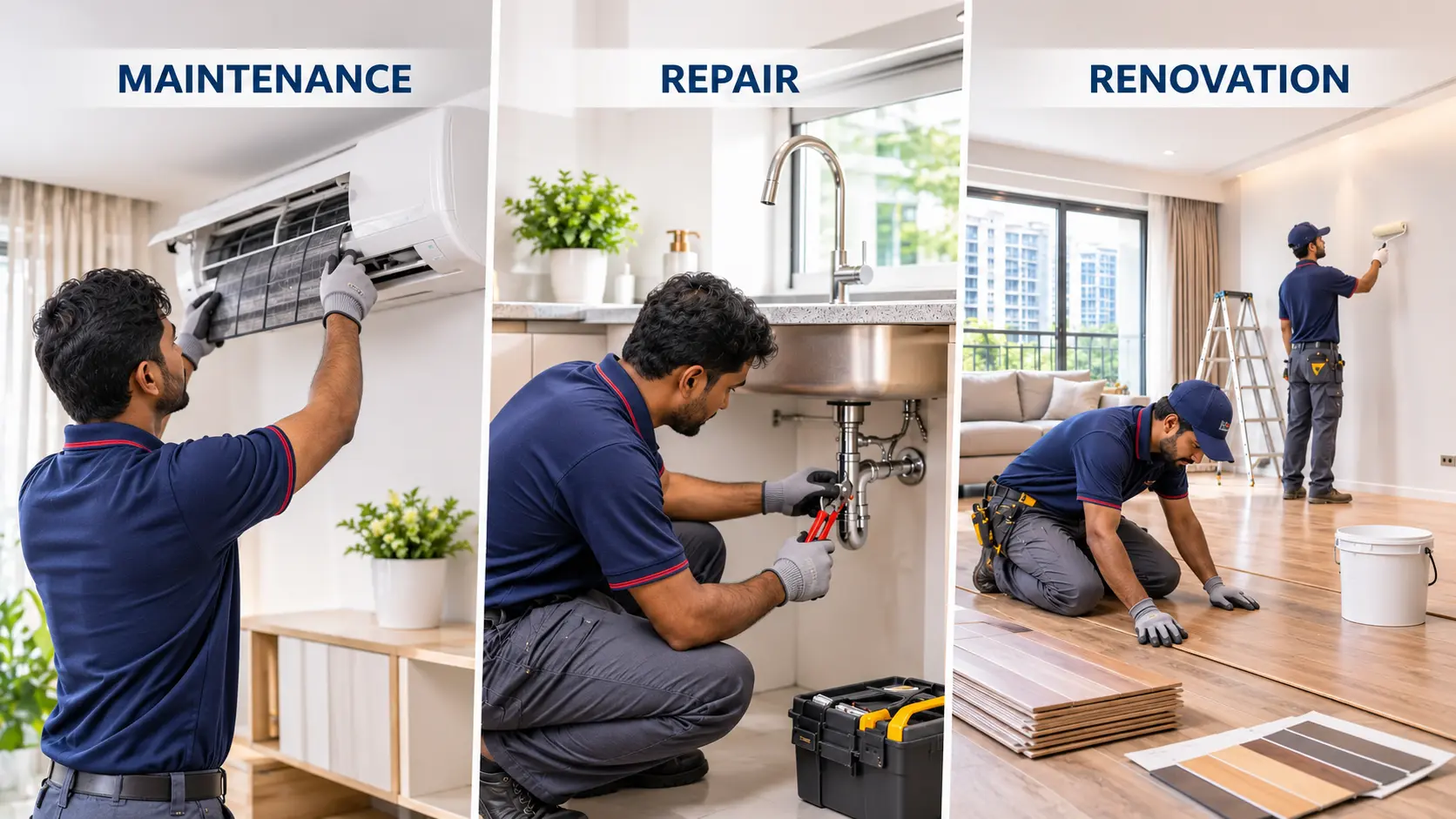
Renovation renews or changes a space. Upgrading improves an existing feature. Repair fixes a fault. Maintenance helps prevent deterioration. Restoration preserves or recovers original character. Interior decoration improves the appearance and atmosphere of a space.
Understanding these differences helps homeowners and property managers make better decisions, set realistic budgets and engage the right professionals.
For any project, begin by identifying the actual need, checking the condition of the property and defining the expected result. Then request a clear quotation and confirm whether specialist workers, permits or approvals are required.
UA Engineering Pte. Ltd. provides a range of renovation, upgrading, structural and exterior, painting and waterproofing, aluminium and glazing, electrical, plumbing, air-conditioning and solar-related services in Singapore. If you are unsure which type of work your property needs, arrange a discussion and site assessment to explore a suitable scope.
Contact UA Engineering Pte. Ltd.
Website: https://uaengineering.com.sg/
WhatsApp / Call: +65 8459 3003
Email: info@uaengineering.com.sg
Regulatory requirements can vary according to property type and work scope. Always check the latest requirements with HDB and the relevant Singapore authorities before starting regulated or approval-controlled work.
Recent Articles

Why Homeowners Need a Reliable Partner for Renovation and Upgrading
November 12, 2026
Why Is Paint Peeling Off Exterior Walls, and What Should You Do?
November 11, 2026
Steel Fabrication and Installation in Singapore: Applications, Quality and Safety Guide
November 10, 2026
The Final Renovation Inspection Checklist Every Homeowner Needs
November 9, 2026
How to Create a Realistic Home Renovation Budget in Singapore
November 8, 2026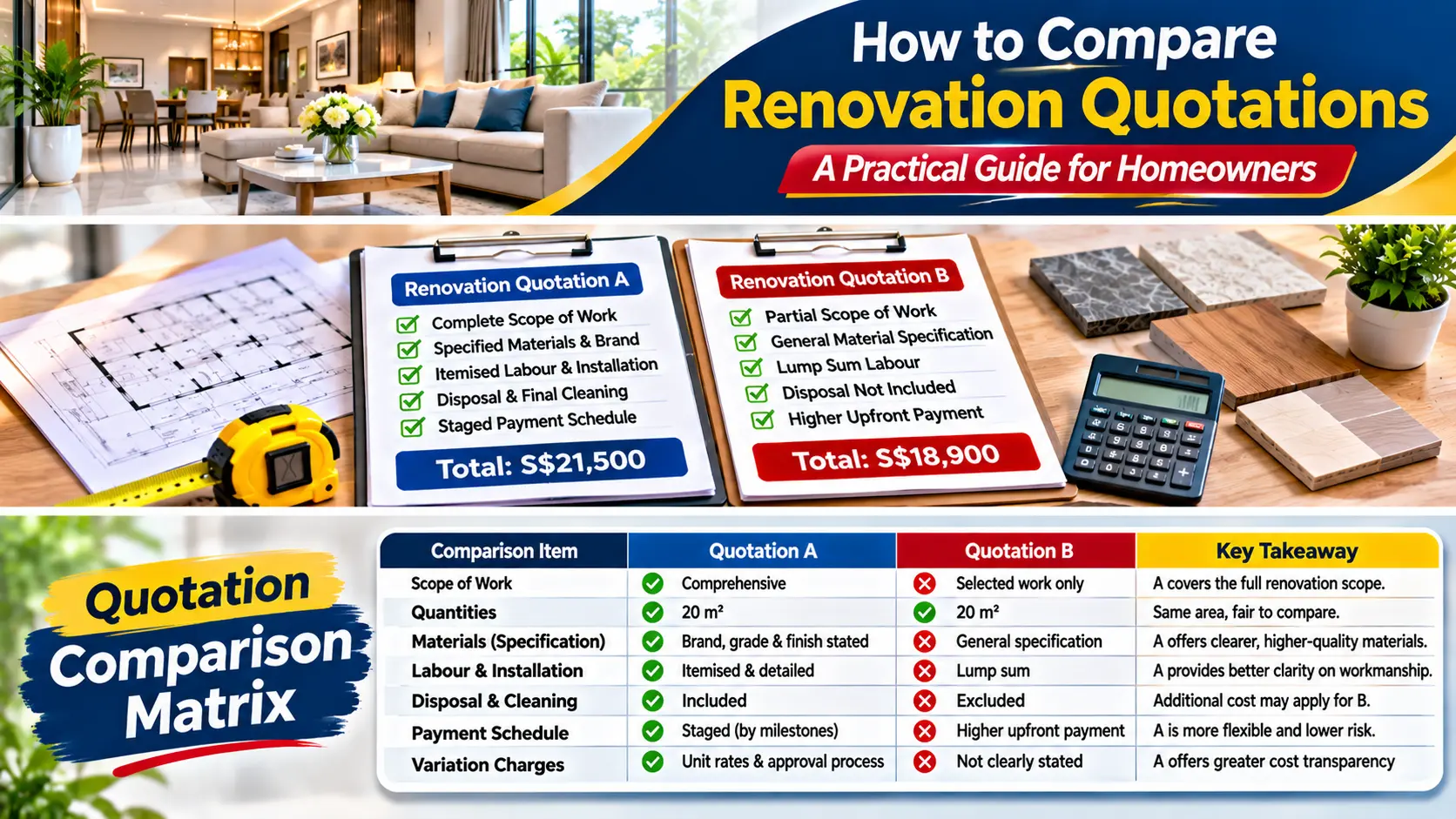
How to Compare Renovation Quotations in Singapore: A Practical Guide for Homeowners
November 7, 2026
Home Renovation Mistakes That Can Cost Time and Money
November 5, 2026
Handyman vs Renovation Contractor vs Specialist Tradesperson: Who Should You Hire?
November 4, 2026
How to Plan a Home Renovation in Singapore: A Complete Guide for HDB, Condo and Landed Homeowners
November 3, 2026