

Renovation & Upgrading
UA Engineering Blog & Insights
How to Create a Realistic Home Renovation Budget in Singapore

Renovating a home is a significant financial decision. Whether you are upgrading an HDB flat, refreshing a condominium or improving a landed property, a realistic budget helps you plan the work, manage expenses and avoid unnecessary financial pressure.
One common mistake is to treat the contractor's quotation as the complete renovation budget. In reality, the total amount you may need to spend can include demolition, labour, materials, fixtures, specialist trades, delivery, disposal, access arrangements, approvals where applicable and additional work arising from existing site conditions.
For example, a kitchen renovation quotation may cover cabinet fabrication and installation but exclude appliances, plumbing alterations, electrical point relocation and disposal of old fittings. If these items are not identified early, the homeowner may discover that the actual project cost is higher than expected.
A realistic budget should therefore be built around the complete project scope, not just the headline quotation.
This guide explains the main cost categories, how to estimate them using reliable information, how to plan for unexpected expenses and how to create a practical renovation budget for a Singapore home. It also provides a sample budget framework without inventing market prices.
1. Start by Defining the Renovation Scope
Before estimating costs, decide exactly what you want to renovate. A budget cannot be reliable if the work itself is unclear.
Begin by listing the rooms, areas and activities involved. Separate essential repairs from optional improvements so you can prioritise spending.
For example, a home renovation may include:
Removing old floor or wall finishes.
Replacing kitchen or bathroom fittings.
Installing new flooring.
Repainting interior or exterior walls.
Building or modifying cabinets.
Installing aluminium windows or glass panels.
Repairing waterproofing or water seepage issues.
Modifying lighting, switches or electrical points.
Improving plumbing or air-conditioning systems.
Next, identify the expected standard of finish. A basic refresh, a partial renovation and a full property upgrade will have different requirements.
Prepare drawings, photographs, measurements or a written list of requirements where possible. These help contractors understand the same scope and prepare more comparable quotations.
Budgeting tip: Do not begin with an arbitrary total and try to fit every requirement into it. First define the essential work, obtain realistic quotations and then decide which optional improvements fit your available budget.
2. Labour Costs
Labour is a major component of many renovation projects. It covers the people carrying out the work, the time required, installation activities, supervision and coordination.
Different trades involve different skills and work methods. Demolition, tiling, painting, carpentry, waterproofing, aluminium installation, plumbing and electrical work should not be treated as identical labour activities.
For example, a painting quotation may include only the application of paint, or it may also include scraping, sanding, crack filling, surface repairs, primer and finishing coats. These are different scopes and should not be compared as if they were the same service.
How to budget for labour
Ask contractors to clarify:
Which work activities are included.
Whether preparation and installation are included.
Whether labour is itemised or charged as a package.
Whether specialist subcontractors are involved.
Who supervises and coordinates the work.
Whether testing, adjustments and finishing are included.
How additional labour will be charged if the scope changes.
For measured work, request the quantity and applicable rate where practical. For package work, ask for a clear description of the activities covered.
Avoid estimating labour costs using an unsupported price per day or per square metre. Labour requirements depend on project size, access, site conditions, complexity, preparation and the agreed standard of workmanship. Use current quotations for the actual property and scope.
3. Material Costs
Materials can have a substantial effect on the final renovation budget. Two quotations may show similar totals while offering very different products, grades, finishes or installation systems.
Common renovation materials include:
Floor and wall tiles.
Vinyl, laminate, timber or other flooring products.
Paint, primer, sealer and protective coatings.
Cement, mortar, grout and adhesives.
Waterproofing products.
Timber boards, laminates and carpentry finishes.
Aluminium profiles and glass.
Pipes, fittings and sanitary accessories.
Lighting fixtures, switches and electrical accessories.
How to estimate material costs
Prepare a material schedule that identifies the product required, its specification, estimated quantity and supplier or source where known.
For each item, check:
Brand and product range.
Size, thickness, grade or finish.
Quantity and measurement basis.
Wastage allowance, if applicable.
Accessories and installation materials.
Delivery charges.
Product warranty and maintenance requirements.
For example, a flooring budget should not contain only the word "tiles". It should identify the intended tile type, size, finish, quantity, adhesive and grout requirements, and installation scope.
Request samples or product specifications before confirming selections. A material that looks suitable in a showroom may appear different under the lighting in your home.
Avoid comparing product names alone
A quotation stating "premium paint" or "quality laminate" is not sufficiently detailed for a reliable comparison. Ask for the exact product range or agreed specification.
If a product has not yet been selected, mark it as a provisional allowance rather than treating an assumed price as a confirmed cost.
4. Demolition and Removal Costs
Demolition is often an early stage of renovation, but its cost can be overlooked when homeowners focus on the new finishes.
Depending on the project, demolition may involve removing old tiles, cabinets, countertops, sanitary fittings, ceiling components, partitions or other existing installations.
The work may require labour, tools, protection of retained surfaces, careful removal and handling of debris.
What to include in the budget
Removal of existing fittings and finishes.
Hacking or dismantling where permitted.
Protection of areas that will remain.
Handling and movement of removed materials.
Loading and transportation.
Disposal arrangements.
Additional preparation after removal.
Do not assume that all demolition work is permitted. Structural elements and certain property components are subject to restrictions and approval requirements. Confirm the proposed work with the relevant authority and qualified professionals before proceeding.
For HDB flats, check HDB's renovation requirements and permit conditions before work begins.
5. Waste Disposal and Site Cleaning
Removing old materials is not the same as disposing of them. Renovation waste may include broken tiles, timber, packaging, old fittings, metal components and other debris.
A contractor may include disposal in the quotation, charge it separately or specify limits on the amount of waste covered.
Questions to ask
Is disposal included in the quotation?
Which types of waste are covered?
Is transportation included?
Are additional collection trips chargeable?
Is protection of common areas included?
Does the quotation include final cleaning?
Is deep or specialist cleaning excluded?
For apartments and condominiums, also check building management requirements for debris movement, lift protection, delivery timings and approved disposal arrangements.
Keep disposal and cleaning as separate budget lines where the quotation treats them separately. This makes it easier to identify missing costs.
6. Fixtures, Fittings and Appliances
Fixtures and fittings can add significantly to a renovation budget, particularly in kitchens and bathrooms.
Examples include:
Kitchen sinks and taps.
Bathroom basins and mixers.
Shower sets and accessories.
Toilet bowls and cisterns.
Kitchen cabinets and countertops.
Wardrobes and storage systems.
Lighting fixtures and ceiling fans.
Door handles, locks and hinges.
Mirrors, glass panels and shower screens.
Kitchen appliances and water heaters.
One quotation may include supply and installation, while another may cover installation only. Some contractors may provide a provisional allowance for selected products, leaving the homeowner to pay any difference if a more expensive item is chosen.
How to budget correctly
For every fixture, identify whether the amount covers:
Product supply.
Delivery.
Installation.
Connection or fitting accessories.
Required plumbing or electrical work.
Removal of the existing product.
Testing and commissioning where applicable.
Keep appliances separate from general renovation materials if you plan to purchase them independently. This helps prevent double counting or overlooking items.
7. Specialist Trades and Technical Work
Some renovation activities require specialist knowledge, tools or regulated professional services. These should be identified early rather than treated as small additions to general renovation labour.
Relevant work may include:
Electrical wiring and installation.
Plumbing alterations.
Air-conditioning installation or servicing.
Waterproofing systems.
Glass and aluminium installation.
Steel fabrication.
Structural or building-related work.
Electrical work
In Singapore, electrical work such as installation, repair or modification of wiring, power points and circuit breakers should be carried out or supervised by an appropriately licensed Electrical Worker (LEW). Include the specialist's scope, testing and any required documentation in the budget.
Plumbing work
PUB requires Licensed Plumbers for regulated water service and sanitary plumbing works, subject to specified simple-work exceptions. A budget for plumbing alterations should identify the work, materials, labour and any applicable submissions or documentation. PUB advises consumers to discuss costs and request itemised quotations.
Air-conditioning and waterproofing
Air-conditioning work may involve equipment, piping, drainage, electrical connections and installation conditions. Waterproofing may require substrate preparation, application of a specified system, curing and testing. Ask the relevant specialist to define the full scope rather than budgeting only for the visible installation.
Budgeting tip: List specialist services separately, even if the main renovation contractor coordinates them. This makes it clear which technical activities are included and who is responsible for carrying them out.

8. Site Access, Delivery and Protection
The physical conditions of a property can affect the cost and duration of renovation work.
A landed property, HDB flat and condominium may have different access arrangements. Even within the same property type, lift availability, loading access, parking, working hours and distance from the delivery point can affect logistics.
Potential costs or arrangements include:
Delivery and unloading.
Transport of materials to upper floors.
Lift or common-area protection.
Temporary storage.
Restricted delivery windows.
Parking or access arrangements.
Protection of existing floors, doors and furniture.
Additional handling for bulky materials.
For condominiums, check management rules and any required renovation deposits, contractor registration procedures or protection arrangements. These are property-specific and should be verified with the management office; do not assume the same requirements or charges apply to every building.
For HDB flats, review the applicable renovation rules and working conditions. For private residential properties, check whether the proposed works require planning permission or other approvals.
9. Permits, Approvals and Professional Fees
Not every renovation activity requires the same approval. Requirements depend on the property type and the nature of the work.
For HDB flats, owners must engage a contractor listed in HDB's Directory of Renovation Contractors for renovation works, and obtain a renovation permit before work that requires prior approval. Certain specialist activities also require appropriately licensed persons.
For private residential properties, URA states that planning permission may be required depending on the property and proposed work. Certain additions or alterations, including works that increase gross floor area, may require approval. Include a separate budget line for applicable:
Submission or application charges.
Professional design or assessment services.
Qualified Person or Professional Engineer services, where required.
Building management deposits or administrative charges, where applicable.
Inspections, testing or certification.
Other project-specific compliance requirements.
Do not insert a generic permit fee without verifying whether it applies. Ask the relevant authority, property management office or appointed professional to confirm the requirement and any current charge.
10. Contingency and Unexpected Conditions
A renovation budget should allow for uncertainty. Once existing finishes are removed, concealed conditions may become visible.
Examples include:
Uneven or damaged floor substrates.
Concealed water leaks.
Deteriorated pipes or fittings.
Moisture damage.
Unexpected surface repairs.
Additional preparation before installation.
Differences between preliminary and actual measurements.
A contingency allowance is money reserved for genuine unexpected conditions or approved changes. It should not be treated as an automatic spending target or an amount the contractor can charge without explanation.
How to plan contingency
First, assess the age and condition of the property, the amount of demolition, the availability of drawings and the complexity of the proposed work.
Then decide on a contingency allowance appropriate to the level of uncertainty. A project involving extensive removal and concealed services may need a different allowance from a simple repainting project.
Keep contingency separate from the contractor's confirmed quotation. If it is used, ask for a written explanation, supporting details and approval before additional work proceeds, except where urgent action is mutually agreed and documented.
11. Additional Costs Homeowners May Overlook
Some expenses are not part of the physical renovation work but can still affect the overall project budget.
Consider whether your project requires:
Temporary accommodation.
Storage or moving services.
Furniture removal and reinstatement.
Replacement of damaged belongings.
Utility or service arrangements.
Additional cleaning.
Independent inspection or professional advice.
Post-renovation furnishing and window treatments.
Replacement of items discovered to be unsuitable or damaged.
Not every homeowner will need these items. Mark them as applicable, not applicable or awaiting confirmation in your budget.
Also consider whether renovation work will affect your normal daily routine. If a kitchen or bathroom will be unavailable, you may need temporary arrangements during the project.
12. How to Build a Sample Renovation Budget Framework
The following framework is designed to help homeowners organise costs without relying on invented market prices.
Use actual quotations, supplier prices, measurements and confirmed charges to fill in the amount column.
Keep the budget in three groups
For better control, organise the framework into three sections:
A. Confirmed costs
These are supported by accepted quotations, selected product prices or confirmed charges.
B. Provisional costs
These are items where the scope, quantity or product selection is not final. Record the basis of the estimate and the date it was obtained.
C. Contingency
This is a separate reserve for uncertainty. Do not include it as if it were already committed project spending.
This structure helps you distinguish between money that is already committed, money that may change and money reserved for unexpected situations.
13. How to Use Real Market Evidence Without Guessing
Homeowners often search online for average renovation prices. These can be useful for initial research, but they should not automatically be treated as the cost of their own project.
A published renovation-cost guide may be based on a particular property type, project size, material standard, date or sample of completed jobs. A promotional package may also cover a limited scope rather than a complete renovation.
To use market information responsibly, check:
Who published the information.
When the figures were collected or updated.
Whether the source explains its sample or methodology.
Which property type and renovation scope are covered.
Whether the prices include labour, materials and taxes.
Whether demolition, disposal and specialist trades are included.
Whether the figures are actual completed-project costs or advertised starting prices.
A practical evidence hierarchy
For your own project, use information in this order:
Site-specific itemised quotations: Best for understanding the actual scope and cost offered for your property.
Current supplier quotations: Useful for checking selected materials, fixtures and appliances.
Written specialist quotations: Important for regulated or technical work.
Recent published market surveys: Useful as broad context if their date and methodology are clear.
Older online articles and informal discussions: Treat as background information, not confirmed pricing evidence.
This article deliberately does not publish generic Singapore renovation price ranges. No project-specific quotations or independently verified market-price dataset have been supplied for this guide. That avoids presenting illustrative or outdated figures as current market facts.
14. Review and Control Your Budget During Renovation
A budget is not a document to prepare once and ignore. It should be updated as the project progresses.
Maintain a simple record showing:
Original approved budget.
Confirmed quotation amounts.
Payments already made.
Outstanding payments.
Approved variations.
Provisional items that have become confirmed.
Contingency used and remaining.
Expected final project cost.
When a contractor proposes additional work, request a written variation explaining the reason, quantity, materials, labour, additional amount and any effect on the completion date.
Do not approve additional work based only on a verbal price where a written record can reasonably be obtained. If an urgent issue requires immediate action, document the agreed instruction and cost as soon as practical.
Review the budget at major project stages, such as after demolition, before material orders, before specialist installation and before handover.
15. Pre-Renovation Budget Checklist
Before appointing a contractor, confirm the following:
The renovation scope is clearly defined.
Work areas and measurements are recorded.
Labour activities and responsibilities are understood.
Materials and specifications are identified.
Demolition and removal are included or separately priced.
Waste disposal and final cleaning are clarified.
Fixtures, fittings and appliances are accounted for.
Specialist trades have been identified and quoted.
Access, delivery and protection arrangements are considered.
Property-specific approvals have been checked.
Temporary accommodation or storage is considered if necessary.
Provisional items are clearly labelled.
Contingency is kept separate from confirmed costs.
Payment stages and variation procedures are documented.
A process for tracking actual spending is in place.
16. How UA Engineering Pte. Ltd. Can Help With Your Renovation Planning
Planning a renovation budget starts with understanding the property and defining the work required. At UA Engineering Pte. Ltd., our services cover renovation and upgrading, structural and exterior works, painting and waterproofing, aluminium and glazing works, electrical, plumbing and air-conditioning services, and solar panel installation.
The appropriate scope, materials and installation arrangements depend on the project, site conditions and homeowner's requirements.
Before proceeding, homeowners should discuss the work areas, material preferences, specialist requirements, exclusions and expected schedule. A clear scope makes it easier to prepare a quotation and understand which costs are included.
If you are planning a home renovation or property improvement project in Singapore, contact our team to discuss your requirements and arrange a suitable assessment.
UA Engineering Pte. Ltd.
𝐖𝐞𝐛𝐬𝐢𝐭𝐞: https://uaengineering.com.sg/
𝗪𝗵𝗮𝘁𝘀𝗔𝗽𝗽 / 𝗖𝗮𝗹𝗹: +65 8459 3003
Conclusion
A realistic renovation budget should reflect the complete cost of the project, not just the contractor's headline price. Labour, materials, demolition, disposal, fixtures, specialist trades, access arrangements, approvals and temporary expenses should all be considered where applicable.
The most reliable starting point is a clearly defined scope supported by current, itemised quotations and confirmed supplier prices. Use published market information only when its source, date, methodology and coverage are clear. Keep provisional amounts separate from confirmed costs, and maintain a contingency reserve for genuine unexpected conditions.
With careful planning and regular cost tracking, homeowners can make better decisions, reduce financial surprises and manage renovation work with greater confidence.
Recent Articles

Why Homeowners Need a Reliable Partner for Renovation and Upgrading
November 12, 2026
Why Is Paint Peeling Off Exterior Walls, and What Should You Do?
November 11, 2026
Steel Fabrication and Installation in Singapore: Applications, Quality and Safety Guide
November 10, 2026
The Final Renovation Inspection Checklist Every Homeowner Needs
November 9, 2026How to Create a Realistic Home Renovation Budget in Singapore
November 8, 2026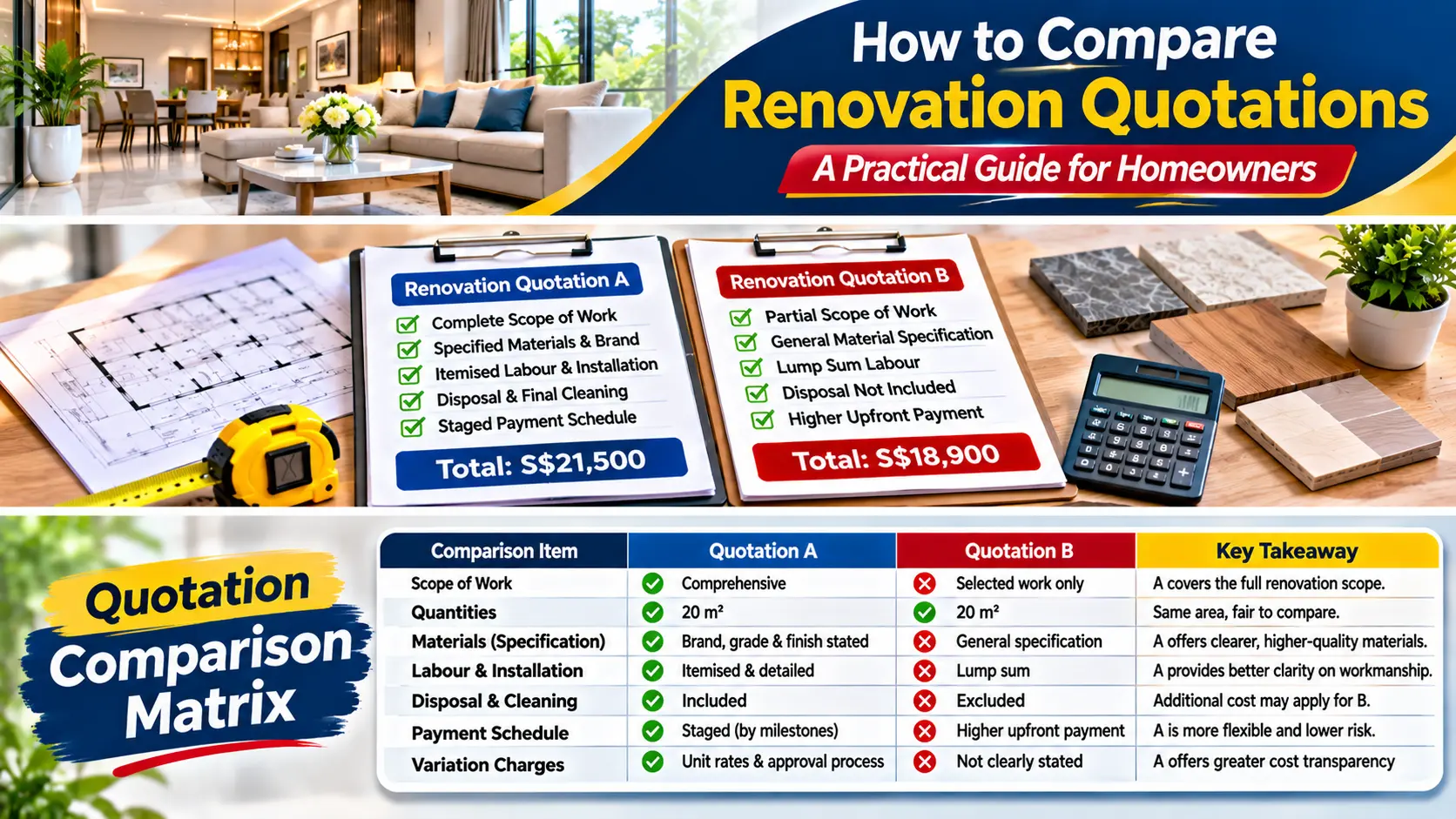
How to Compare Renovation Quotations in Singapore: A Practical Guide for Homeowners
November 7, 2026
Home Renovation Mistakes That Can Cost Time and Money
November 5, 2026
Handyman vs Renovation Contractor vs Specialist Tradesperson: Who Should You Hire?
November 4, 2026
How to Plan a Home Renovation in Singapore: A Complete Guide for HDB, Condo and Landed Homeowners
November 3, 2026