

Renovation & Upgrading
UA Engineering Blog & Insights
Why Homeowners Need a Reliable Partner for Renovation and Upgrading

Renovating or upgrading a home is a significant decision. Whether you are refreshing a few rooms, improving an existing kitchen, repairing exterior surfaces or planning a larger property transformation, the process involves many decisions that can affect the cost, schedule and final result.
Homeowners often focus on the visible parts of renovation: new flooring, fresh paint, modern cabinets, improved lighting and attractive finishes. However, a successful project also depends on the less visible work behind the scenes. Requirements must be understood, measurements checked, materials selected, trades coordinated and completed work inspected.
This is why choosing a reliable renovation partner matters. A suitable contractor should be able to explain the proposed work, identify where specialist professionals are needed, provide a clear quotation and communicate when changes or unexpected conditions arise.
Reliability should not be judged by advertising claims alone. Homeowners can evaluate it through practical evidence, such as written documentation, relevant project experience, clear responsibilities and consistent communication.
This guide explains the qualities to look for and how to assess a renovation partner before appointing one.
1. Clear Communication from the Beginning
Good communication helps ensure that the homeowner and contractor understand the same project requirements. Misunderstandings can arise when instructions are incomplete, expectations are assumed or important decisions are discussed only verbally.
For example, a homeowner may request a kitchen upgrade expecting new cabinets, countertop replacement, plumbing adjustments and additional electrical points. The contractor may interpret the request as cabinet replacement only. Without clarification, both parties may have different expectations of the final result.
What clear communication should include
A renovation partner should take time to understand:
The homeowner's objectives and priorities.
The rooms or areas included in the project.
Existing problems that need attention.
Preferred materials, colours and finishes.
Functional requirements and design preferences.
Budget expectations and project constraints.
Expected completion timeframe.
Any property-specific requirements.
The contractor should also explain technical matters in language the homeowner can understand. If a proposed solution has limitations, those should be discussed before work begins.
How homeowners can evaluate communication
Notice whether the contractor asks relevant questions during the initial discussion. Does the representative listen carefully, take measurements and record requirements? Are unclear points raised rather than ignored?
After the meeting, request a written summary of the discussed scope. This helps both parties confirm that the requirements have been understood correctly.
2. A Realistic and Clearly Defined Scope of Work
A realistic scope describes what will be done, where it will be done and what is not included. It provides the foundation for the quotation, schedule, material selection and project responsibilities.
A broad description such as "complete home renovation" is not enough to explain the work in detail.
For example, an exterior painting project may require:
Inspection of existing wall conditions.
Cleaning and removal of loose paint.
Surface preparation.
Repair of suitable cracks and damaged areas.
Application of an appropriate primer.
Application of the specified exterior coating.
Protection of surrounding surfaces.
Final inspection and cleaning.
If the quotation includes only painting application but excludes preparation and repairs, the homeowner should understand that difference before accepting it.
Why scope definition matters
A clearly defined scope helps to:
Reduce misunderstandings.
Identify missing activities.
Compare contractor quotations fairly.
Estimate labour and material requirements.
Plan the work sequence.
Establish a basis for quality checks.
Manage additional requests and variations.
How to evaluate the proposed scope
Ask the contractor to identify each major activity and its corresponding location. Check whether measurements, quantities, material specifications and finishing requirements are recorded where appropriate.
Also review the exclusions. If an activity is necessary for the intended result but is not included, ask how it will be handled and whether a separate quotation is required.
A reliable working relationship begins with realistic expectations rather than an unclear promise to complete everything.
3. The Right Specialist Involvement
Renovation projects can involve several trades. A general renovation contractor may coordinate the overall work, but some activities require specialist knowledge, technical equipment or a regulated licence.
Depending on the project, specialist services may include:
Electrical installation and wiring.
Plumbing alterations.
Air-conditioning installation or servicing.
Waterproofing and leak investigation.
Aluminium and glazing installation.
Steel fabrication and installation.
Structural assessment and related professional services.
Flooring, tiling and specialised finishing.
For example, a bathroom upgrade may involve demolition, waterproofing, tiling, plumbing and sanitary fitting installation. Each activity has different technical requirements.
In Singapore, regulated electrical work must be carried out or supervised by an appropriately licensed Electrical Worker (LEW). Regulated water service and sanitary plumbing works require a PUB Licensed Plumber, subject to specified simple-work exceptions.
Structural building work may also require assessment, design or submission by an appropriate Qualified Person, depending on the proposed work and applicable requirements.
How homeowners can evaluate specialist involvement
Ask the contractor:
Which activities will be completed by the main renovation team?
Which activities will be handled by specialist tradespeople?
Who is responsible for appointing and coordinating them?
Are licences or professional qualifications required for the proposed work?
What testing, documentation or handover records will be provided?
Do not assume that a contractor's general renovation experience automatically authorises the company or its workers to perform every regulated activity.
The objective is to ensure that the right people are responsible for the right work.
4. Organised Work Coordination and Scheduling
A renovation project often involves several activities that must be completed in a suitable order. Poor coordination can cause delays, repeated work, material damage and unnecessary costs.
Consider a kitchen renovation. Demolition may need to be completed before surface preparation. Plumbing and electrical requirements must be coordinated with cabinet and appliance positions. Cabinets and countertops may then be installed before final connections and finishing.
If these activities are not planned properly, workers may interfere with one another or completed work may need to be altered.
What good coordination involves
A contractor managing a multi-activity project should consider:
Work sequence and dependencies.
Availability of materials.
Delivery and storage arrangements.
Access to the property.
Specialist trade schedules.
Site protection and housekeeping.
Safety arrangements.
Progress monitoring.
Inspection and rectification time.
Handover requirements.
A schedule does not need to be complicated, but it should identify the major stages and expected timing.
How homeowners can evaluate coordination
Request a proposed work schedule showing the main activities and their sequence. Ask who will be the main contact during the project and how updates will be provided.
For larger projects, clarify how delays will be communicated and how changes to the schedule will be handled.
A contractor should not promise a completion date without considering the scope, material lead times, site conditions and specialist availability.
5. Transparent Written Quotations
A written quotation helps homeowners understand what they are paying for. It should provide enough detail to identify the proposed activities, materials, quantities and commercial terms.
A quotation that shows only one total amount may be difficult to evaluate, particularly when comparing several contractors.
What a useful quotation should explain
Depending on the project, review whether it includes:
Itemised scope of work.
Work locations and quantities.
Material brands or specifications.
Labour and installation activities.
Demolition and removal.
Delivery and disposal arrangements.
Specialist services.
Exclusions and provisional items.
Payment stages.
Variation or additional-work procedures.
Estimated project duration.
Warranty terms, where offered.
Compare more than the total price
A lower quotation is not automatically better value. It may cover fewer activities, use different materials or exclude important services.
For example, two painting quotations may show different totals because one includes scraping, crack repairs, primer and multiple finishing coats, while the other covers repainting only.
Before comparing prices, check that both contractors are quoting for a comparable scope and specification.
How homeowners can evaluate quotation transparency
Ask questions about unclear descriptions and request written clarification. Check whether additional work is priced using agreed rates or a separate approval process.
Avoid relying on verbal promises for important inclusions. If an item matters to the project, it should be recorded in the accepted quotation or written agreement.
6. Quality Checks Throughout the Project
Quality should not be considered only at the final handover. Some work becomes concealed as the renovation progresses, making it difficult to inspect later.
For example, waterproofing may be covered by tiles, and electrical wiring may be concealed behind walls or ceilings. Where inspection or testing is required, it should be arranged at the appropriate stage.
Examples of project quality checks
Surface preparation and painting
Check whether loose coatings are removed, surfaces are prepared appropriately and the specified primer and finishing system are used.
Flooring and tiling
Review layout, alignment, visible edges, grout and transitions. Technical concerns about the substrate or installation should be referred to the appropriate specialist.
Carpentry
Check dimensions, material specifications, door alignment, drawer movement, hardware and finishing.
Plumbing
Observe accessible connections and basic drainage behaviour. Regulated or concealed plumbing work should be checked by the appropriate professional.
Electrical installations
Check visible fittings and agreed locations. Electrical safety testing and regulated work should be handled by an appropriately licensed LEW.
Waterproofing
Request agreed installation records and test evidence where applicable. A finished tiled surface alone does not prove that concealed waterproofing is effective.
How homeowners can evaluate quality control
Ask the contractor when inspections will take place and who will conduct them. Find out whether photographs, test records or product documentation will be supplied for relevant activities.
A final walkthrough should compare completed work against the accepted scope, drawings and approved variations. Defects should be recorded with clear locations, photographs and agreed rectification actions.

7. Safety, Compliance and Property Requirements
Renovation work takes place in occupied homes, shared residential buildings and commercial properties. Safety and compliance should therefore be considered from the planning stage.
Different property types and activities may have different requirements.
For HDB renovation work, homeowners should check HDB's applicable renovation rules, permit requirements and Directory of Renovation Contractors. Certain electrical, plumbing and structural activities also have specific professional or regulatory requirements.
Condominiums may have management rules concerning renovation timings, worker registration, lift protection, delivery access and deposits. These should be confirmed with the building management office.
For private residential properties, certain additions or alterations may require planning or building approvals, depending on the nature of the work.
What homeowners should ask
Have applicable property requirements been checked?
Are required permits or approvals being arranged?
Are regulated activities assigned to the appropriate professionals?
What safety measures will be used at the worksite?
How will common areas and existing finishes be protected?
Who will manage waste and housekeeping?
A contractor should be clear about its own responsibilities and should not suggest that a general quotation replaces required statutory approvals or professional appointments.
8. Communication During Renovation
Even a well-planned project may encounter unexpected conditions. Concealed damage, unavailable materials, measurement differences or homeowner-requested changes can affect the scope and schedule.
The important question is how these matters are handled.
A practical communication process
Agree on a main contact person before work begins. Decide how updates will be shared, such as through scheduled meetings, messages, photographs or written progress reports.
When an issue arises, the contractor should explain:
What has happened.
Which part of the project is affected.
What options are available.
Whether additional cost is involved.
Whether the completion date may change.
What approval is required before proceeding.
For additional work, request a written variation describing the new scope, price and schedule impact. Keep records of the approval.
Homeowners should also communicate changes clearly. Late design decisions or product substitutions can affect procurement and work sequencing.
9. A Practical Framework for Evaluating a Renovation Partner
Rather than relying on advertising language, use a simple evidence-based assessment.
You can score each area according to the evidence provided, but avoid treating a numerical score as proof of technical competence. For regulated or specialist activities, verify the relevant licence or professional credentials independently.
10. Questions to Ask Before Appointing a Contractor
Before making a decision, consider asking:
Can you explain the proposed scope room by room or activity by activity?
Will you conduct a site assessment before finalising the quotation?
Which materials and product specifications are included?
What work is excluded?
Which specialist trades will be involved?
Who will supervise and coordinate the project?
What is the proposed work sequence and estimated duration?
How will progress updates be provided?
How will additional work and variations be approved?
What inspections or testing will be arranged?
What documents and warranties will be provided at handover?
How will defects or incomplete items be handled?
Review the answers alongside the quotation, contract, relevant project examples and available references.
11. How UA Engineering Pte. Ltd. Supports Renovation and Upgrading Projects
At UA Engineering Pte. Ltd., our property improvement services cover renovation and upgrading, structural and exterior works, painting and waterproofing, aluminium and glazing works, electrical, plumbing and air-conditioning services, and solar panel installation.
Different projects require different combinations of work. A home renovation may involve several activities, while a smaller improvement project may need only one specialised service.
The appropriate scope, materials, technical responsibilities and work sequence depend on the property and the homeowner's requirements. Clear discussions before work begins help establish what is included, what requires specialist involvement and what should be confirmed separately.
Homeowners considering a project can discuss their requirements with our team and request a suitable assessment and quotation.
UA Engineering Pte. Ltd.
Website: https://uaengineering.com.sg/
WhatsApp / Call: +65 8459 3003
Conclusion
A reliable renovation partner should offer more than an attractive quotation or confident promises. Homeowners should look for clear communication, a realistic scope, appropriate specialist involvement, organised coordination, written commercial terms and a practical quality-check process.
These qualities can be evaluated through evidence: detailed quotations, relevant project examples, documented responsibilities, verified professional credentials and clear procedures for variations and rectification.
No contractor can guarantee that every renovation will be free from unexpected conditions. However, a well-defined process makes it easier to identify issues, communicate decisions and manage the work responsibly.
Before appointing a renovation partner, take time to compare the complete proposal rather than focusing only on the price. A clear understanding at the beginning can help create a more organised renovation experience and a better-informed decision for your home.
Recent Articles
Why Homeowners Need a Reliable Partner for Renovation and Upgrading
November 12, 2026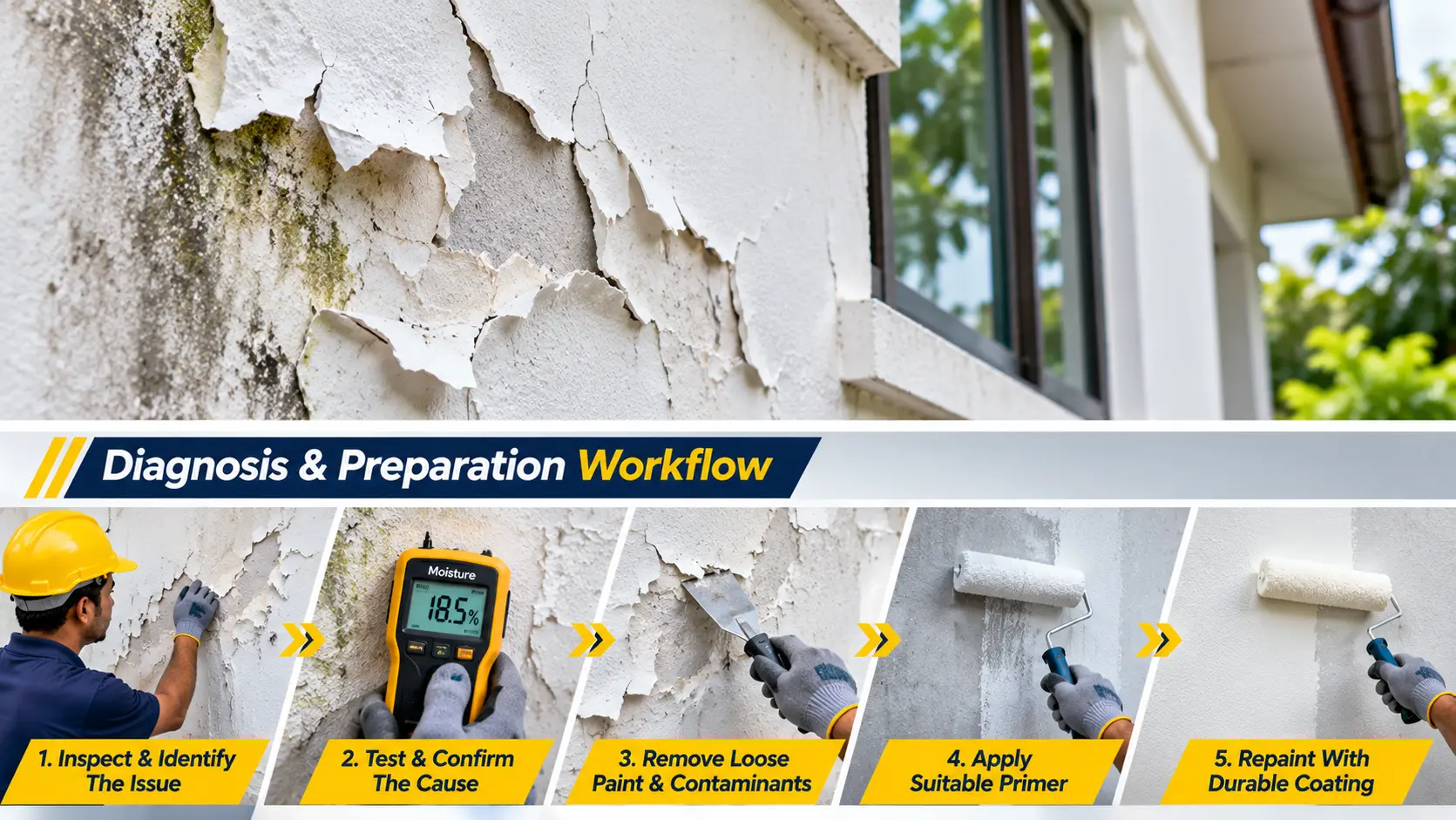
Why Is Paint Peeling Off Exterior Walls, and What Should You Do?
November 11, 2026
Steel Fabrication and Installation in Singapore: Applications, Quality and Safety Guide
November 10, 2026
The Final Renovation Inspection Checklist Every Homeowner Needs
November 9, 2026
How to Create a Realistic Home Renovation Budget in Singapore
November 8, 2026
How to Compare Renovation Quotations in Singapore: A Practical Guide for Homeowners
November 7, 2026
Home Renovation Mistakes That Can Cost Time and Money
November 5, 2026
Handyman vs Renovation Contractor vs Specialist Tradesperson: Who Should You Hire?
November 4, 2026
How to Plan a Home Renovation in Singapore: A Complete Guide for HDB, Condo and Landed Homeowners
November 3, 2026