

Painting & Waterproofing
UA Engineering Blog & Insights
The Complete Singapore Home Renovation Guide: Planning, Budgeting, Approvals and Handover
A practical guide for first-time homeowners, HDB flat owners, condominium residents and landed-property owners in Singapore.
Renovating a home in Singapore is an opportunity to improve comfort, functionality, safety and long-term property value. Whether you are refreshing an HDB flat, upgrading a condominium or modernising a landed house, a successful renovation requires more than attractive designs. You need a realistic budget, suitable materials, a reliable contractor, a workable schedule and a clear understanding of the rules that apply to your property.
For first-time homeowners, the process can feel complicated. Different property types have different restrictions, some works require approval, and the cheapest quotation is not always the best value. Poor planning can lead to unexpected costs, delays, disputes or work that must be altered or removed.
This guide explains how to plan a home renovation in Singapore from the first idea to final handover. It includes practical examples, official government resources and a checklist you can use before appointing a contractor.
1. Start with a clear renovation plan
The first step is to understand what your home needs before deciding how it should look. Begin by walking through every room and recording problems, desired improvements and priorities.
For example, you may need to repair a leaking bathroom, improve kitchen storage, replace damaged flooring, repaint the exterior or create a more open living area. Separate essential repairs from optional upgrades so that necessary work is not sacrificed to decorative features.
Establish your priorities
Organise your requirements into three categories:
Essential repairs: Water leaks, damaged finishes, unsafe electrical fittings, deteriorated waterproofing and other defects.
Functional improvements: Better storage, improved lighting, kitchen upgrades, additional electrical points and more practical room layouts.
Aesthetic improvements: Feature walls, decorative panels, new paint colours, premium flooring and customised furniture.
This hierarchy helps you decide where to spend money first if your budget becomes tight.
Measure and document the property
Record room dimensions, ceiling heights, door and window positions, existing electrical points and plumbing locations. Take photographs of visible defects and existing finishes. If available, obtain the property's floor plan and relevant renovation records.
Measurements and photographs give contractors a clearer starting point and help you compare quotations on the same scope of work.
Do not assume that a wall can be removed, a window changed or a bathroom relocated simply because it appears technically possible. Structural elements, shared building services and regulatory restrictions may limit what can be done.
Prepare a design brief
A useful design brief explains your preferred style, colours, materials, storage requirements, appliances and expected completion date. Include reference photographs, but ask whether those designs are practical for your home's dimensions, ventilation, maintenance needs and budget.
Before requesting final quotations, establish which rooms are included, which items will be supplied by you, which materials the contractor will provide and what is excluded. A detailed scope reduces misunderstandings once construction starts.
2. Understand how renovation requirements differ by property type
Singapore has several residential property types, and each has different renovation restrictions. Before planning demolition, external alterations or changes to building services, confirm the rules for your home.
HDB flats
HDB renovation works must comply with HDB's renovation guidelines. You must engage a contractor listed in the HDB Directory of Renovation Contractors (DRC), including for work that does not require a permit. Certain works require prior written approval, and some require licensed specialists or a Qualified Person.
For example, wall hacking requires HDB's prior written approval. Electrical modifications must be handled by an appropriately licensed electrical worker, and regulated plumbing works require a PUB Licensed Plumber. Window works have additional requirements.
Check the official HDB renovation guidelines before appointing a contractor. HDB listing is a regulatory requirement, not a guarantee of workmanship quality, so you should still review the contractor's experience, contract and references.
Housing & Development Board+2
Condominium apartments
Condominium renovations are governed by the development's management rules, applicable building regulations and any relevant authority approvals.
Before work begins, ask the management office about renovation applications, deposits, insurance, working hours, contractor registration, lift protection, debris removal and delivery arrangements. Some developments require a specific renovation form or method statement.
Do not assume that approval from the management office replaces approval from URA, BCA or another authority where such approval is required. Works affecting external façades, windows, structural components, fire safety or shared services need particular attention.
Landed properties
Landed homes often offer more flexibility for layout changes and external improvements, but additions, extensions, roof changes, boundary structures and structural alterations can trigger planning or building requirements.
The URA guide to renovating private residential property explains how requirements depend on property type and the proposed work. URA's Landed Housing e-Advisor provides an initial assessment tool for certain landed-house alterations. Its coverage is not universal, so complex work may still require professional advice.
Urban Redevelopment Authority (URA)+1
The key principle: identify your property type first, define the exact work second, and establish the required approvals before finalising the schedule.
3. Set a realistic renovation budget
A realistic budget should include every major cost, not just the contractor's headline quotation. Materials, labour, professional fees, delivery, disposal, temporary accommodation and unforeseen repairs can all affect the final amount.
Break the budget into categories
As a practical budgeting guideline, consider setting aside 10–20% of your estimated renovation cost for unforeseen expenses. This is a planning recommendation, not an official Singapore requirement. Older homes and projects involving concealed plumbing, waterproofing or structural alterations may need a larger reserve.
Compare quotations on the same scope
Request itemised quotations from at least three suitable contractors. Compare the same rooms, work quantities, material specifications and exclusions rather than choosing based only on the total price.
Ask whether each quotation includes labour, installation, hacking, debris disposal, site protection, testing, cleaning, permit-related expenses and defect rectification. If one contractor excludes carpentry hardware or waterproofing tests while another includes them, their prices are not directly comparable.
Avoid vague descriptions such as “premium tiles” or “high-quality paint”. Ask for the brand, product range, dimensions, finish and other relevant specifications in writing.
Control variations and payments
Unexpected conditions can emerge after demolition. If a contractor discovers damaged pipes or deteriorated surfaces, request photographs, an explanation, a price breakdown and a revised schedule before authorising additional work.
Agree on a payment schedule tied to clearly defined milestones. Keep invoices, receipts and records of approved changes. Avoid paying the full project amount before the work is completed.
You can also review CaseTrust's renovation accreditation information and CASE's consumer guidance. Accreditation can provide additional safeguards under the applicable scheme, but it is not a substitute for reading your contract carefully.
Housing & Development Board
4. Select materials suitable for Singapore's climate
Singapore's humid conditions and frequent rainfall make material selection especially important. Materials must suit the location, intended use, maintenance requirements and expected lifespan.
Flooring
Porcelain and ceramic tiles are suitable for many kitchens, bathrooms and living spaces. Compare slip resistance, tile size, grout requirements and substrate preparation.
Vinyl flooring provides a wide variety of designs and can be comfortable underfoot. Confirm that the selected product is suitable for the substrate and moisture conditions.
Timber and engineered wood offer a warm appearance but require appropriate moisture control, installation and maintenance.
Natural stone creates a distinctive finish, but porosity, staining, sealing and maintenance vary by stone type.
For bathrooms, balconies and outdoor areas, select finishes appropriate for wet conditions. A glossy tile may look attractive but could be unsuitable where slip resistance is important.
Paint and waterproofing
For interior walls, choose a paint system appropriate for the room and existing surface. Kitchens and bathrooms may need finishes that tolerate humidity and cleaning. Exterior walls require coatings designed for outdoor exposure and the relevant substrate.
Surface preparation is essential. Loose paint, cracks, algae, damp patches and deteriorated plaster should be assessed before repainting. Applying a new coat over an unresolved leak will not fix the underlying problem.
Waterproofing also requires careful preparation, suitable materials, appropriate curing and testing before the area is covered. For HDB flats, follow the applicable requirements for wet-area renovation and floor finishes rather than relying on general advice from a supplier.
Aluminium, glass and external components
For windows, doors, balcony glazing, shelters and other external components, consider corrosion resistance, drainage, weather sealing, safety glazing and maintenance. Confirm that the design complies with relevant property rules and building requirements.
Carpentry, electrical and plumbing fixtures
Cabinetry should suit your storage needs, available space and expected exposure to moisture. Check hardware quality, ventilation and access for future repairs.
Electrical fittings must be compatible with the installation and should prioritise safety over appearance. For taps, showers and sanitary appliances, check dimensions, water pressure, replacement-part availability and cleaning requirements.
Before ordering, confirm the actual product specifications, quantities, colours and finish samples. Keep a record of approved selections so that substitutions can be identified before installation.
5. Choose a reliable renovation contractor
A contractor influences the quality, cost, communication and timing of your renovation. Take time to assess suitability before signing a contract.
Check experience and relevant registrations
Ask whether the contractor has completed projects similar to yours. A team experienced in exterior painting may not be suitable to undertake complex structural alterations without the necessary expertise and professionals.
For HDB flats, verify the contractor through the official HDB Directory of Renovation Contractors.
For regulated electrical work, use an appropriately licensed electrical worker. For regulated plumbing, use a PUB Licensed Plumber. For work requiring structural design, certification or submission, appoint the appropriate Qualified Person.
For private properties, ask about relevant qualifications, insurance, subcontractors and experience with approval processes.
Review completed projects
Request photographs and references from previous customers. Where possible, examine the quality of finishing, alignment, paintwork, tiling, waterproofing details and installation.
Ask how the contractor handles unexpected repairs, additional charges, delays and defects. A professional contractor should be able to explain the work clearly and document agreed decisions.
Read the contract carefully
Before work starts, the written contract should identify:
The detailed scope of work and exclusions.
Materials, brands, quantities and specifications.
Total price and payment milestones.
Start date, target completion date and permitted working hours.
Responsibility for permits, applications and professional submissions.
The procedure for variations and additional charges.
Workmanship warranty and defect rectification arrangements.
Dispute resolution and termination terms.
Never rely solely on verbal assurances. Record changes in writing and obtain agreement before additional work begins.
6. Understand approvals before construction
Not every renovation requires a permit, but certain works must be approved before they begin. Approval requirements depend on the property type, scope and applicable rules.
HDB permits
Use the HDB renovation permit guidance to determine whether your work requires prior approval.
HDB's rules cover areas such as demolition, building works, windows, electrical installations, air-conditioning and plumbing. Some projects may require a Qualified Person to inspect, certify or supervise the work.
Do not allow hacking or demolition to begin until the necessary approval is confirmed. Unauthorised work may have to be corrected or removed.
Housing & Development Board+1
URA and BCA requirements
For private residential properties, check whether the proposed work requires planning permission under URA's guidance. Structural works may require approved plans and a permit before construction begins.
BCA explains the process in its permit for structural works guidance. Where applicable, a Qualified Person and the relevant builder must coordinate the required submissions and permits. Material changes to approved structural plans may need further approval before the changed work proceeds.
Urban Redevelopment Authority (URA)+1
Electrical and plumbing requirements
The Energy Market Authority (EMA) advises consumers to engage licensed electrical workers for electrical work, including wiring modifications and adding or replacing power points.
PUB's licensed plumbing guidance explains the requirements for regulated water-service and sanitary plumbing work. Ask the plumber to identify the scope, applicable submissions and associated charges in the quotation.
EMA+1
Important: Contractor experience, a property manager's approval or a previous owner's renovation does not automatically establish that your proposed work is permitted. Confirm the current requirements before starting.
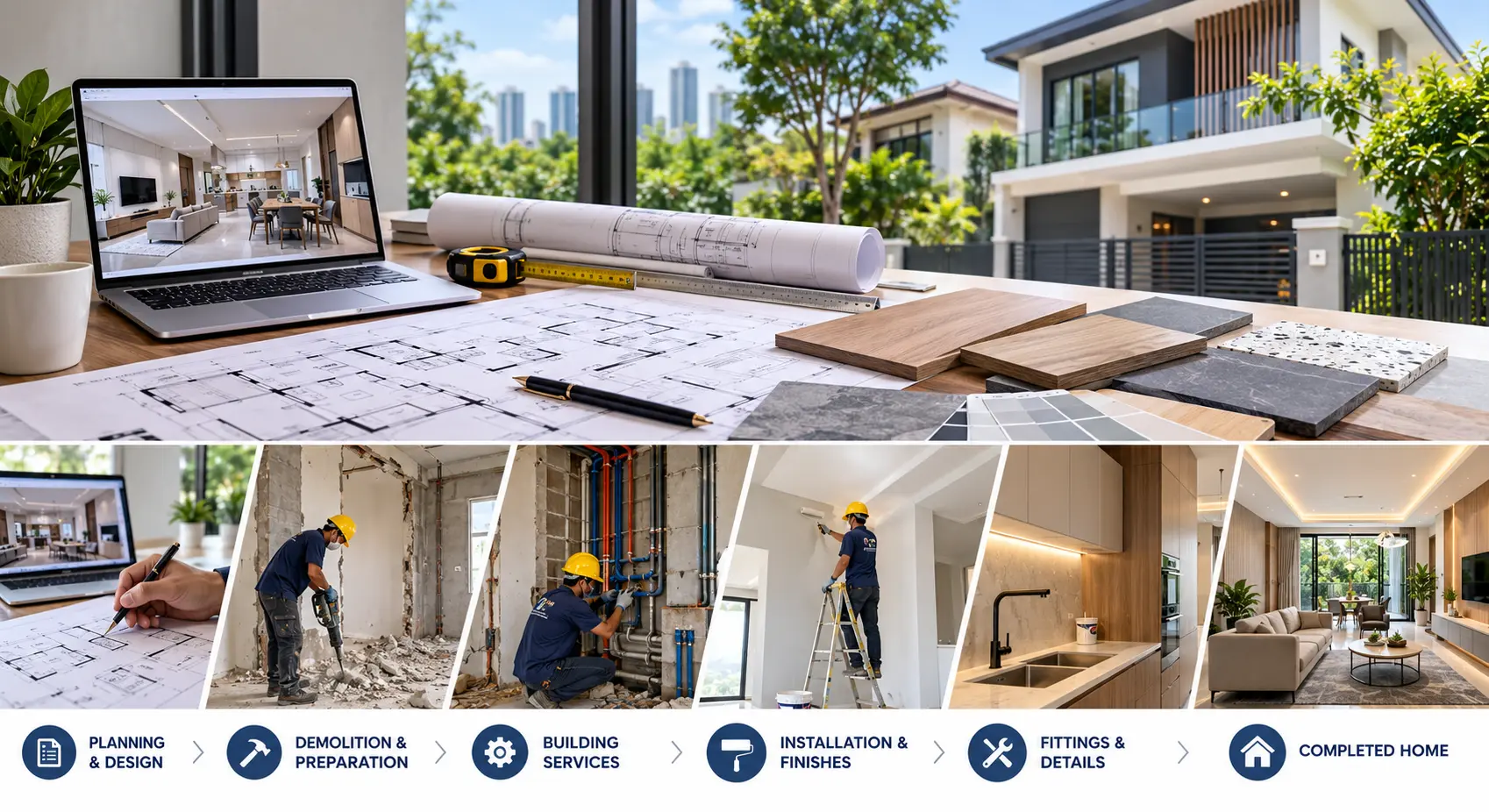
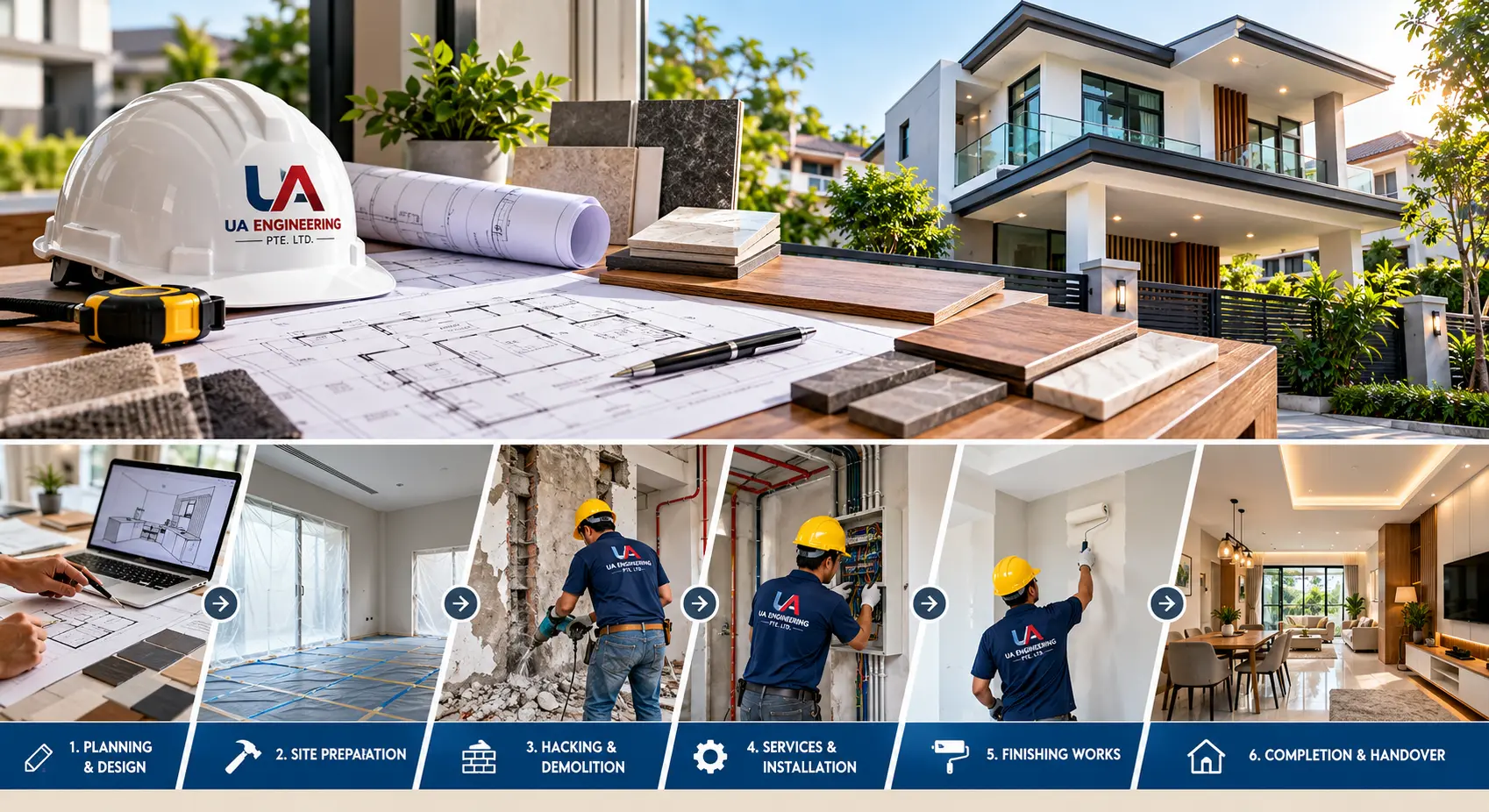
7. Follow a logical renovation process and schedule
Renovation tasks need to be completed in the correct order. A schedule helps coordinate workers, material deliveries, inspections and handover.
The following sequence is a general planning model. Actual stages may overlap or vary depending on the project.
Planning and design: Confirm measurements, layout, scope, budget and materials.
Approvals and procurement: Obtain required permits and management approvals, then order materials.
Site protection and preparation: Protect existing finishes and arrange safe access and debris removal.
Demolition and repairs: Complete only authorised removal work and address discovered defects.
Building services: Carry out the required structural, electrical, plumbing and air-conditioning work.
Waterproofing and finishes: Complete relevant waterproofing checks, tiling, flooring, ceilings and painting.
Carpentry and fittings: Install cabinetry, lighting, sanitary fittings, doors, glazing and agreed fixtures.
Testing and handover: Inspect the work, test installations, rectify defects and collect documents.
Manage dependencies and lead times
Some tasks cannot be completed until others are finished. For example, concealed electrical and plumbing installations need to be checked before walls or ceilings are closed. Waterproofing tests must be completed at the appropriate stage before finishes conceal the relevant surfaces.
Custom cabinetry, glass panels, aluminium windows and other made-to-measure products can take time to manufacture. Confirm measurements and delivery dates early, but avoid final fabrication measurements until the site is ready.
Allow for drying and curing time, inspections, unexpected repairs and defect correction. Do not assume that a fixed move-in date can be met simply because a contractor has provided an optimistic estimate.
Communicate throughout the project
Arrange regular progress updates and keep written records of decisions. If a delay occurs, ask which task is affected, what caused the delay, whether other work can proceed and how the completion date will change.
For HDB flats, comply with the applicable renovation hours and neighbour-notification requirements. HDB's important renovation information sets out restrictions, including different permitted times for general and noisy work.
Housing & Development Board
8. Prioritise site safety
Renovation work can expose workers, occupants, neighbours and visitors to hazards. Safety should be planned before the site is opened and monitored throughout the project.
Protect workers and occupants
Keep unauthorised people away from active work areas. Ensure workers use suitable protective equipment, such as safety footwear, gloves, eye protection and head protection where required. Work at height requires appropriate access equipment and fall-prevention or fall-protection measures.
Electrical tools and temporary power supplies must be suitable for the work environment. Materials should be stored securely, and corridors, entrances and emergency exits must remain clear.
Do not allow workers to remove structural elements, safety barriers or restricted building components without the required assessment and approval. If a potentially dangerous condition is discovered, pause the affected work and arrange an appropriate assessment.
Protect neighbours and common areas
Use suitable dust-control measures and protect floors, lifts and corridors where required. Remove debris safely, prevent materials from blocking shared access routes and comply with site-specific working-hour restrictions.
For condominium and landed-property projects, confirm arrangements for external work, roof access, façade access and other higher-risk activities. The responsible contractor should explain the work method and necessary precautions before proceeding.
9. Conduct a proper final inspection and handover
The project is not complete simply because the contractor says the work is finished. A systematic inspection helps identify defects, incomplete items and installations that need adjustment.
Inspect finishes and fittings
Check painted walls and ceilings under good lighting for missed areas, uneven coverage, stains, peeling or visible damage. Inspect flooring for cracked or loose tiles, damaged edges, uneven transitions and poor finishing.
Open and close cabinetry drawers, doors, hinges and handles. Check that agreed fixtures are installed and that windows and doors operate properly. Inspect visible seals and weatherproofing around relevant openings.
Test electrical and plumbing work
Check switches, lights, sockets and other agreed electrical installations. Required electrical testing or certification should be completed by the appropriate licensed professional.
Run taps and showers, flush toilets, check accessible pipe connections and observe drainage. Look for leaks, unusual pooling or drainage problems. For wet areas, confirm that the required waterproofing checks were completed at the appropriate stage.
A visual inspection alone cannot prove the condition of concealed waterproofing or electrical systems, so collect relevant test records and professional documentation where applicable.
Record and resolve defects
Prepare a written defect list with photographs, locations, descriptions and agreed rectification dates. Send it to the contractor and keep a copy.
Before closing the project, collect:
Final invoices and payment records.
Product manuals and maintenance instructions.
Workmanship and product warranty documents.
Applicable test results, certificates and approvals.
Paint references, spare tiles or agreed leftover materials.
After-sales contact details and outstanding defect commitments.
Follow the payment terms in your contract and agree on how outstanding defects will be handled. Clear documentation makes it easier to maintain the home and resolve problems after moving in.
10. First-time homeowner checklist
Use this checklist before signing a contract and throughout the renovation.
Planning
Identify essential repairs and renovation priorities.
Measure the home and photograph existing defects.
Prepare a written design brief and scope of work.
Establish a budget and contingency reserve.
Confirm whether temporary accommodation or storage is needed.
Contractor and costs
Obtain at least three comparable, itemised quotations.
Verify relevant registrations, licences and experience.
Review previous work and references.
Confirm material brands, quantities and specifications.
Agree on payment milestones, warranties and exclusions.
Sign a written contract before construction starts.
Approvals and preparation
Check the applicable HDB, URA, BCA and other requirements.
Obtain condominium management approval where applicable.
Appoint licensed specialists and Qualified Persons when required.
Confirm work hours, neighbour notices and delivery arrangements.
Ensure the necessary approvals are in place before restricted work begins.
Construction and handover
Agree on a written schedule and regular progress updates.
Monitor site safety and compliance with the agreed scope.
Check concealed work at the appropriate stage.
Confirm relevant waterproofing tests and installation checks.
Inspect finishes, fixtures and building services.
Record defects and agree on rectification dates.
Collect warranties, manuals, certificates and final invoices.
11. Frequently asked questions
How much should I budget for home renovation in Singapore?
There is no single suitable budget for every home. The cost depends on property type, size, existing condition, scope of work, materials and the level of customisation. Obtain itemised quotations based on the same scope and reserve funds for unexpected issues.
Do all HDB renovations require a permit?
No. Requirements vary by work type, but HDB's renovation rules still apply even when a particular job does not require a permit. HDB flat owners must engage a contractor listed in the Directory of Renovation Contractors. Check the official guidelines before work begins.
Can I renovate a condominium without informing the management office?
Do not assume this is allowed. Check the development's current renovation rules, application procedures, permitted working hours and contractor requirements before scheduling work.
Can I remove a wall or extend a landed house?
That depends on the wall, property and proposed alterations. Structural work requires appropriate assessment and may need approval. Landed-house extensions and other alterations may require planning permission or building approval. Consult the relevant authorities and qualified professionals before proceeding.
How do I avoid renovation disputes?
Use a written contract with a detailed scope, clear specifications, agreed payment milestones, a variation procedure and defect-resolution terms. Keep records of quotations, payments, instructions, photographs and approved changes.
Conclusion
A successful home renovation in Singapore begins with careful planning and a clear understanding of the requirements for your property. A realistic budget, suitable materials, a reliable contractor, the right approvals and a logical construction schedule help reduce avoidable costs and delays.
For first-time homeowners, the most important rule is simple: agree on the scope, materials, price, schedule, approvals and responsibilities in writing before work begins. Monitor progress, prioritise safety and complete a proper inspection before closing out the project.
With a structured approach, you can create a home that is functional, comfortable, safe and suited to your long-term needs.
Recent Articles

Why Homeowners Need a Reliable Partner for Renovation and Upgrading
November 12, 2026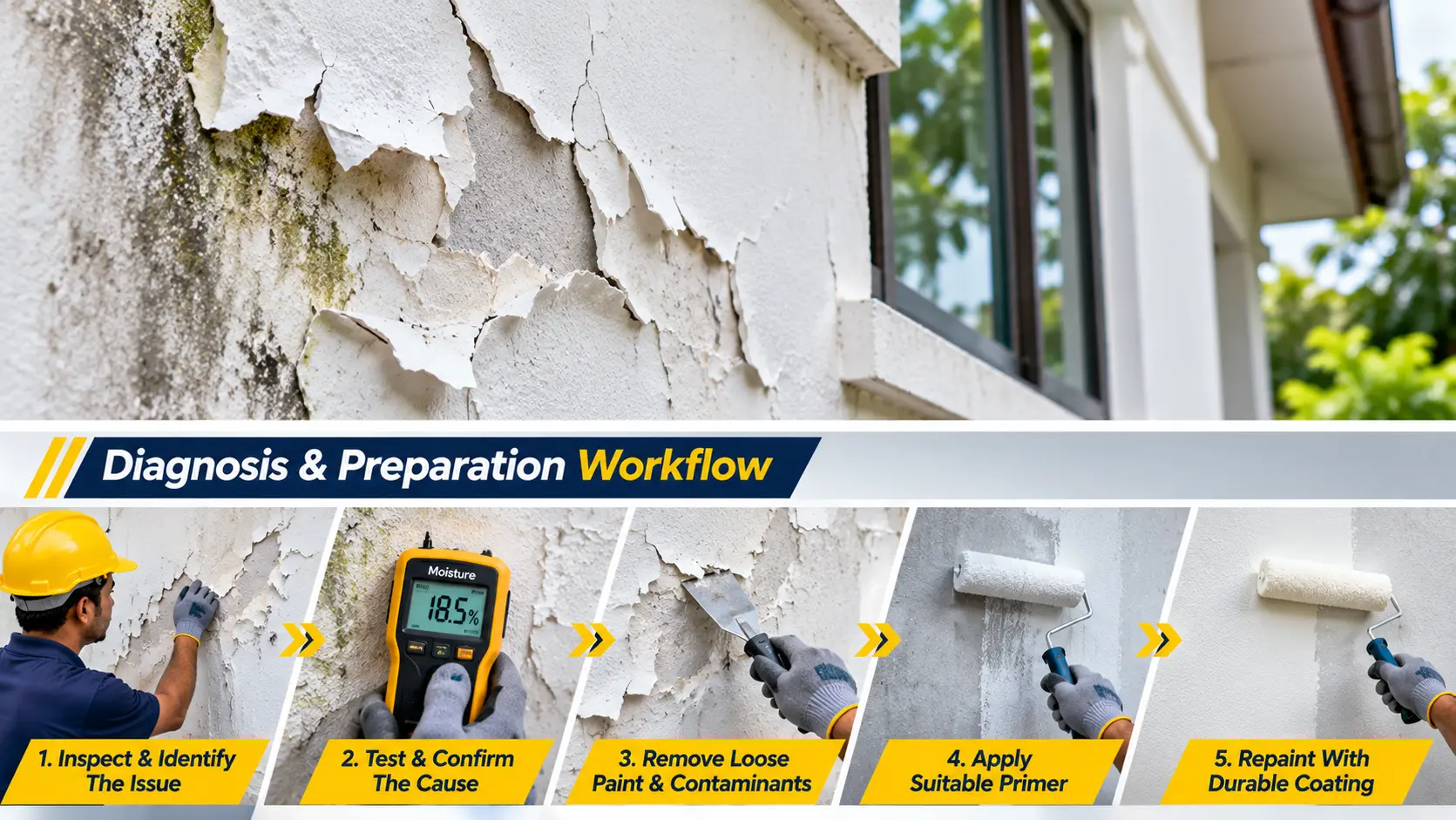
Why Is Paint Peeling Off Exterior Walls, and What Should You Do?
November 11, 2026
Steel Fabrication and Installation in Singapore: Applications, Quality and Safety Guide
November 10, 2026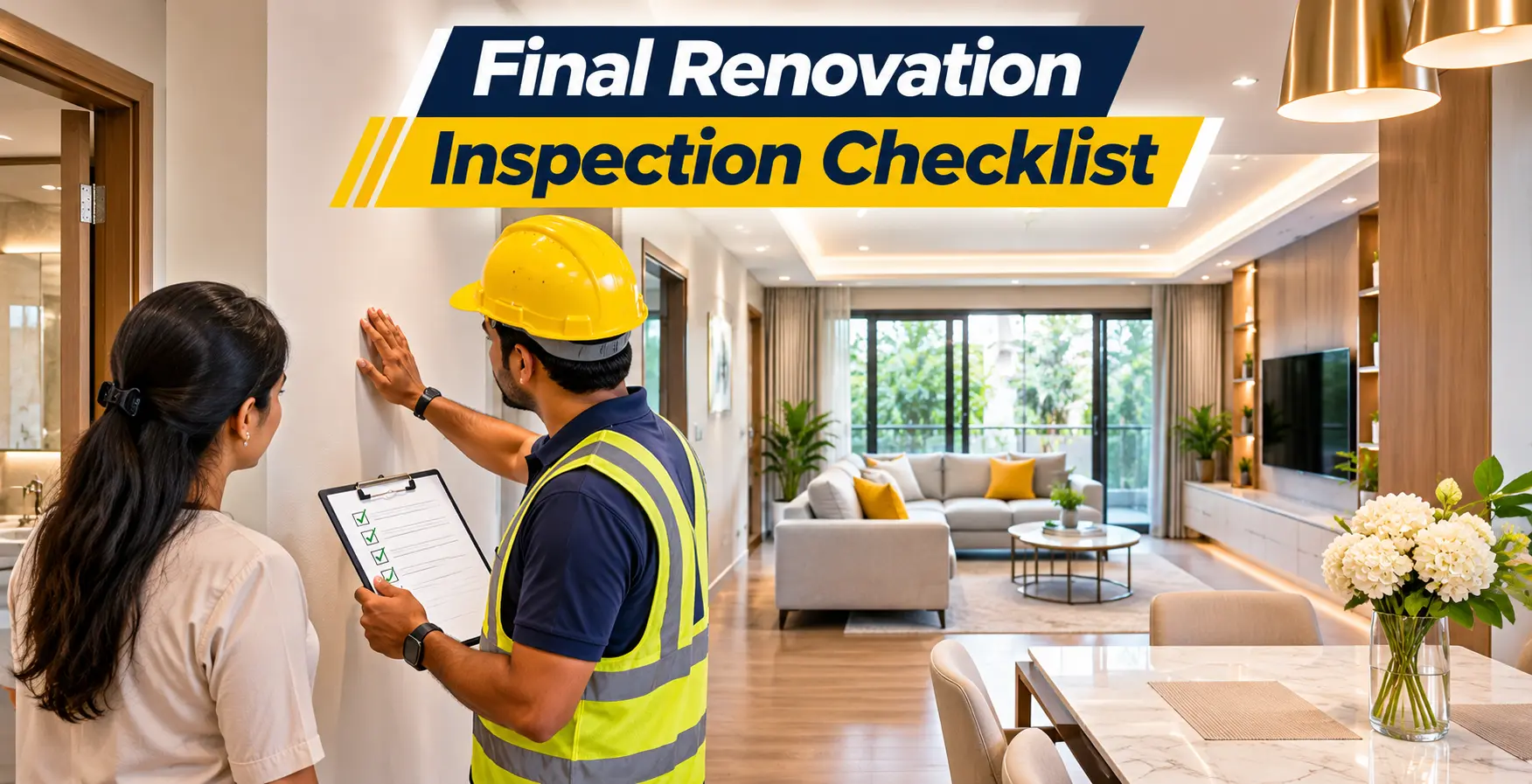
The Final Renovation Inspection Checklist Every Homeowner Needs
November 9, 2026
How to Create a Realistic Home Renovation Budget in Singapore
November 8, 2026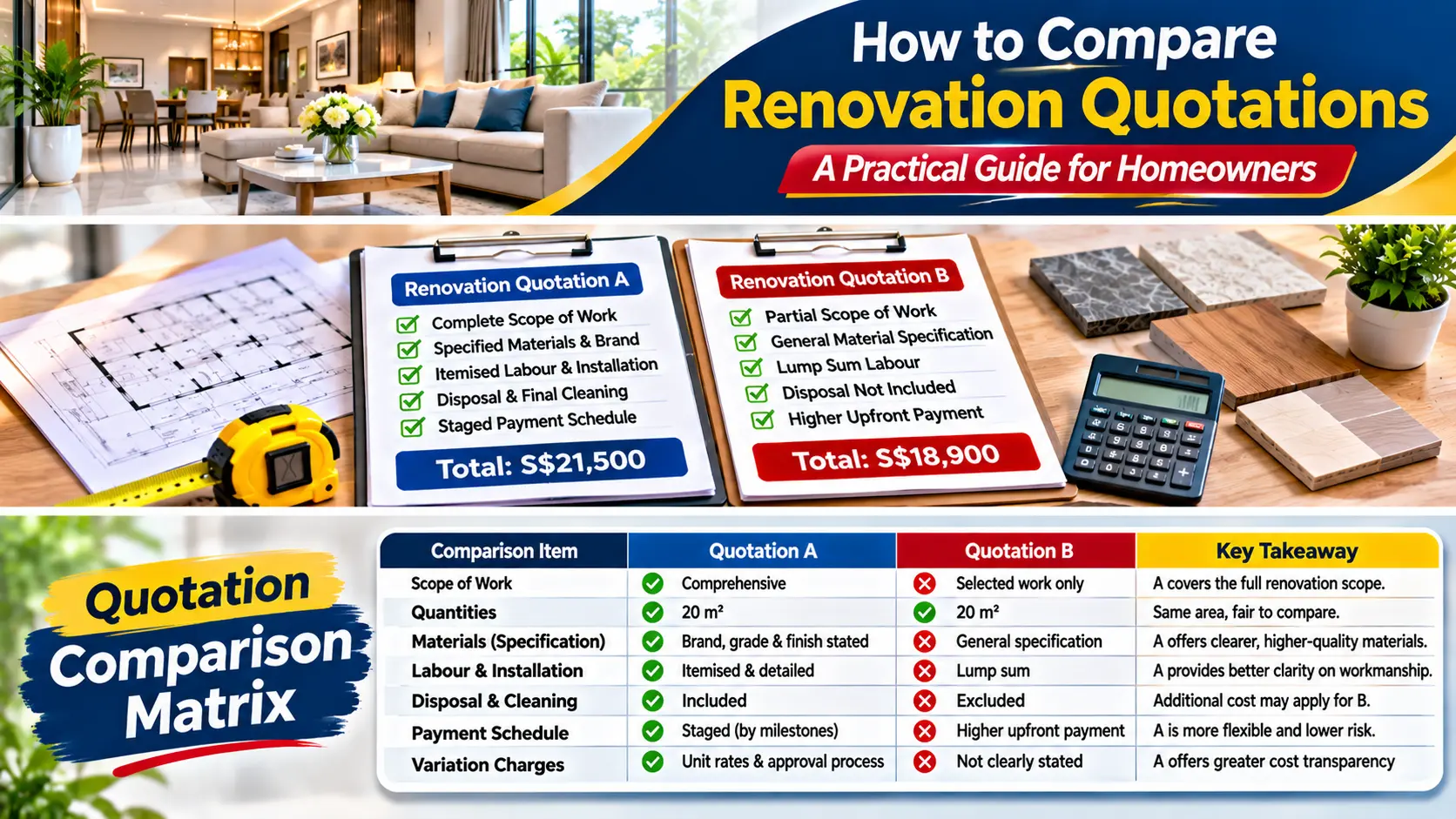
How to Compare Renovation Quotations in Singapore: A Practical Guide for Homeowners
November 7, 2026
Home Renovation Mistakes That Can Cost Time and Money
November 5, 2026
Handyman vs Renovation Contractor vs Specialist Tradesperson: Who Should You Hire?
November 4, 2026
How to Plan a Home Renovation in Singapore: A Complete Guide for HDB, Condo and Landed Homeowners
November 3, 2026